
Our products
Backoffice
In the rapidly evolving field of agricultural research, high-throughput plant phenotyping stands out as a critical component for advancing plant breeding by optimizing breeding schemes and by improving the desirable trait heritability & genetic gain of your field trials.
Our latest paper delves into the transformative potential of Real-Time Kinematic (RTK) technology, specifically in the realm of drone acquisitions, to elevate the precision and efficiency of phenotypic data collection and processing.
This comprehensive guide provides a meticulous "recipe for success," offering a detailed checklist to ensure RTK-precision in drone operations. We explore the manifold benefits of RTK technology, elucidating its operational mechanics with both base stations, such as EMLID, and various network solutions like Orpheon, Point One, and SmartNet. The paper walks you through step-by-step procedures, distinguishing between RTK FIX and FLOAT modes, and explains the implications of operating without RTK activation.
Furthermore, we discuss advanced options like Post-Processing Kinematic (PPK) to push the boundaries of precision even further. Whether you are a researcher, agronomist, or technology enthusiast, this paper equips you with the knowledge to harness RTK technology for groundbreaking advancements in plant phenotyping.
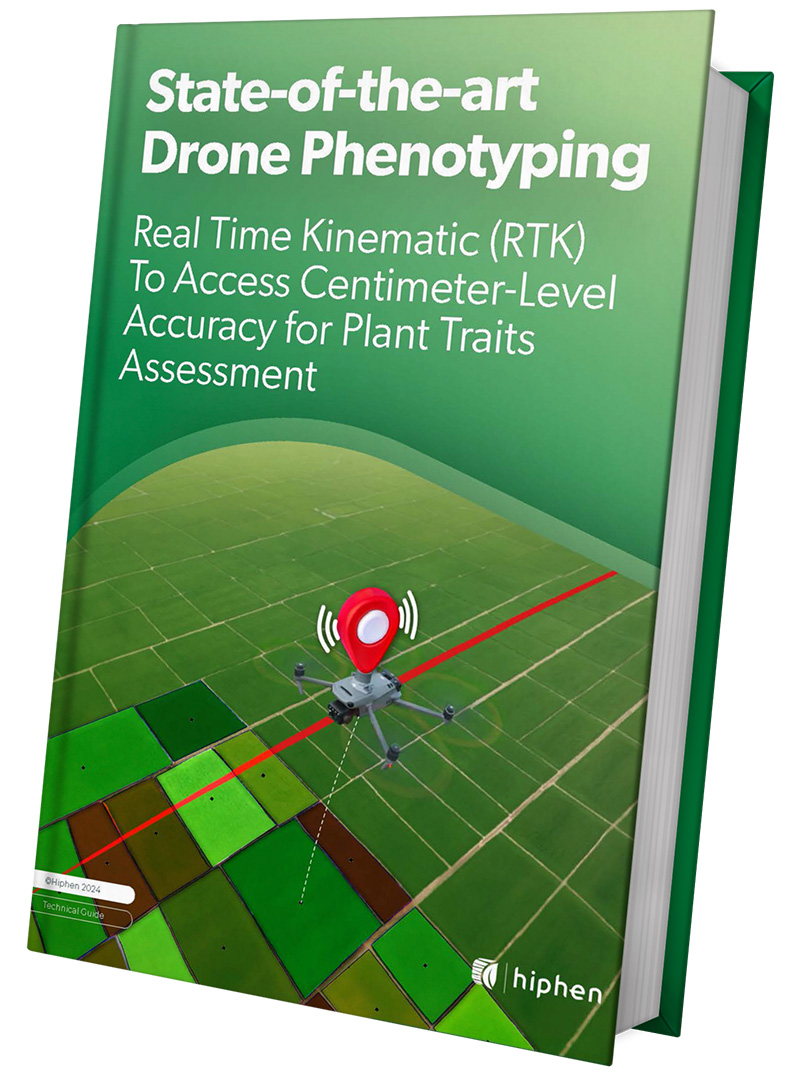
The full content of this technical guide is available as a downloadable PDF: https://hiphen-rtk-white-paper-2024.grwebsite.fr/
Welcome to our comprehensive technical guide on plant height trait assessment, a crucial aspect in unlocking plant biomass estimations to speed up breeding cycles. Within these pages, you'll discover the recipe for success in assessing plant height traits, essential for informed decision-making in breeding programs. We delve into the significance of Ground Control Points (GCPs) and why they are pivotal in ensuring accurate and reliable data collection, essential for robust analyses and interpretation.
Drawing from real-world experiences, this guide presents compelling use cases that showcase the practical application of plant height assessments in various agricultural contexts. Moreover, gain invaluable insights from expert agronomists who offer nuanced perspectives and practical advice honed through years of experience in the field.
In addition to presenting established methodologies, we explore alternative approaches and options for those looking to further optimize their plant height trait assessment processes. Whether you're a seasoned professional seeking to refine your techniques or a newcomer eager to grasp the fundamentals, this guide equips you with the knowledge and tools necessary to elevate your breeding programs to new heights.
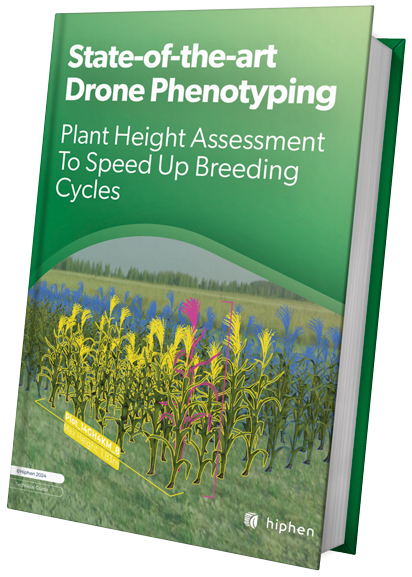
The full content of this technical guide is available as a downloadable PDF: https://white-paper-hiphen-plant-height.grwebsite.fr/