
Our products
Backoffice
In the quest to meet the growing global food demand, agriculture is undergoing a technological revolution. One of the most transformative advancements is digital phenotyping, a method that leverages cutting-edge technologies to analyze plant traits with unprecedented precision. This approach not only enhances crop productivity but also contributes to sustainable farming practices.
Digital phenotyping involves the use of advanced imaging, sensors, and data analytics to measure and analyze plant characteristics such as growth rates, disease resistance, and yield potential. By capturing high-resolution data, this technology enables researchers and farmers to make informed decisions that optimize crop performance and resource utilization.
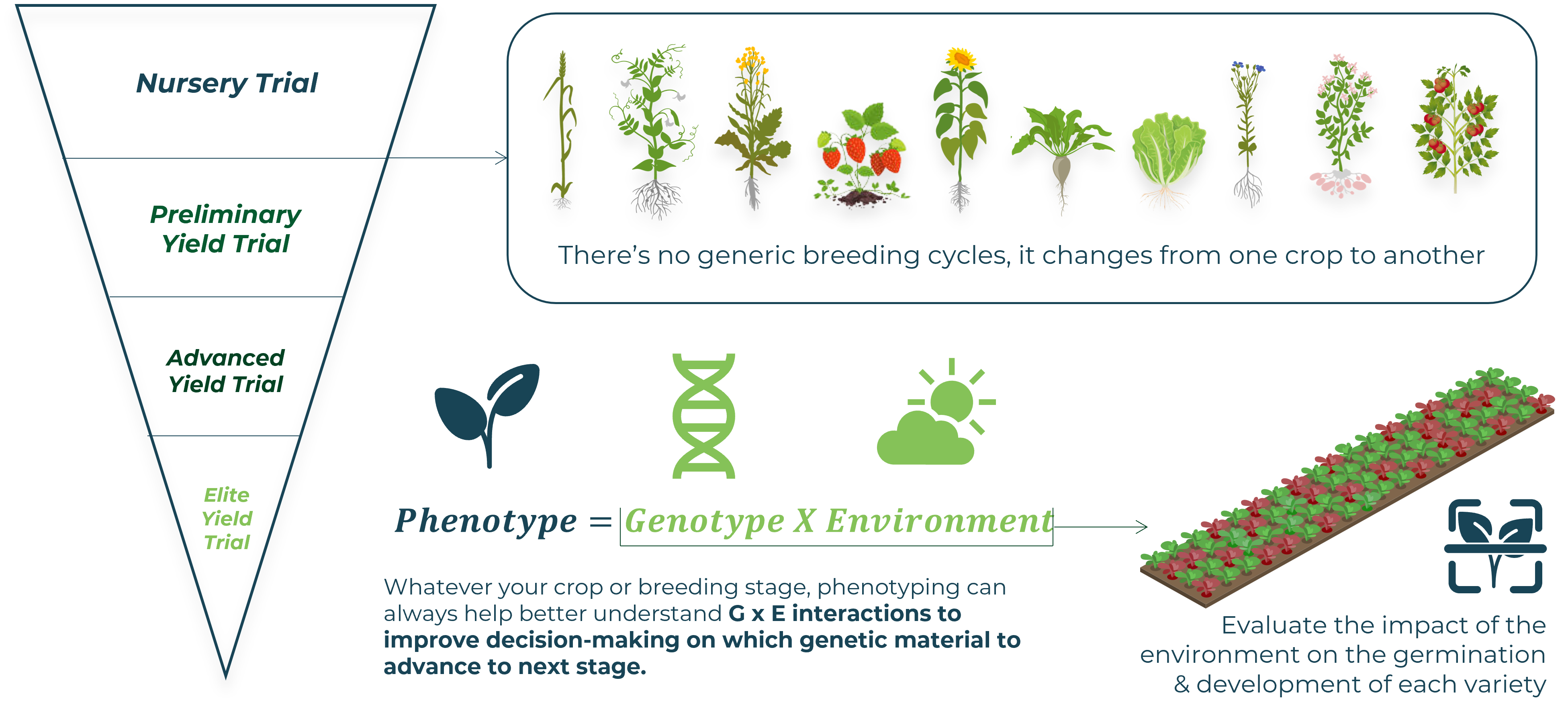
As a leader in the field, Hiphen offers innovative solutions that empower agricultural stakeholders to harness the full potential of digital phenotyping:
Literal: This agile and flexible handheld device provides ultra-precise plant measurements under field conditions, allowing for detailed assessments of various crops almost in real-time thanks to automated trait processing.
PhenoScale® (Drone-based Phenotyping): A high-throughput phenotyping platform that processes drone-captured data into valuable phenotypic information, facilitating frictionless plant analysis.
Acquisition of SlantRange (USA) Aurea Imaging (NL) Phenotyping Activities: By integrating Slantrange’s (in 2023) and Aurea Imaging’s (in 2025) expertise, Hiphen has strengthened its leadership in drone-based image analytics, enhancing its ability to deliver comprehensive digital phenotyping services.
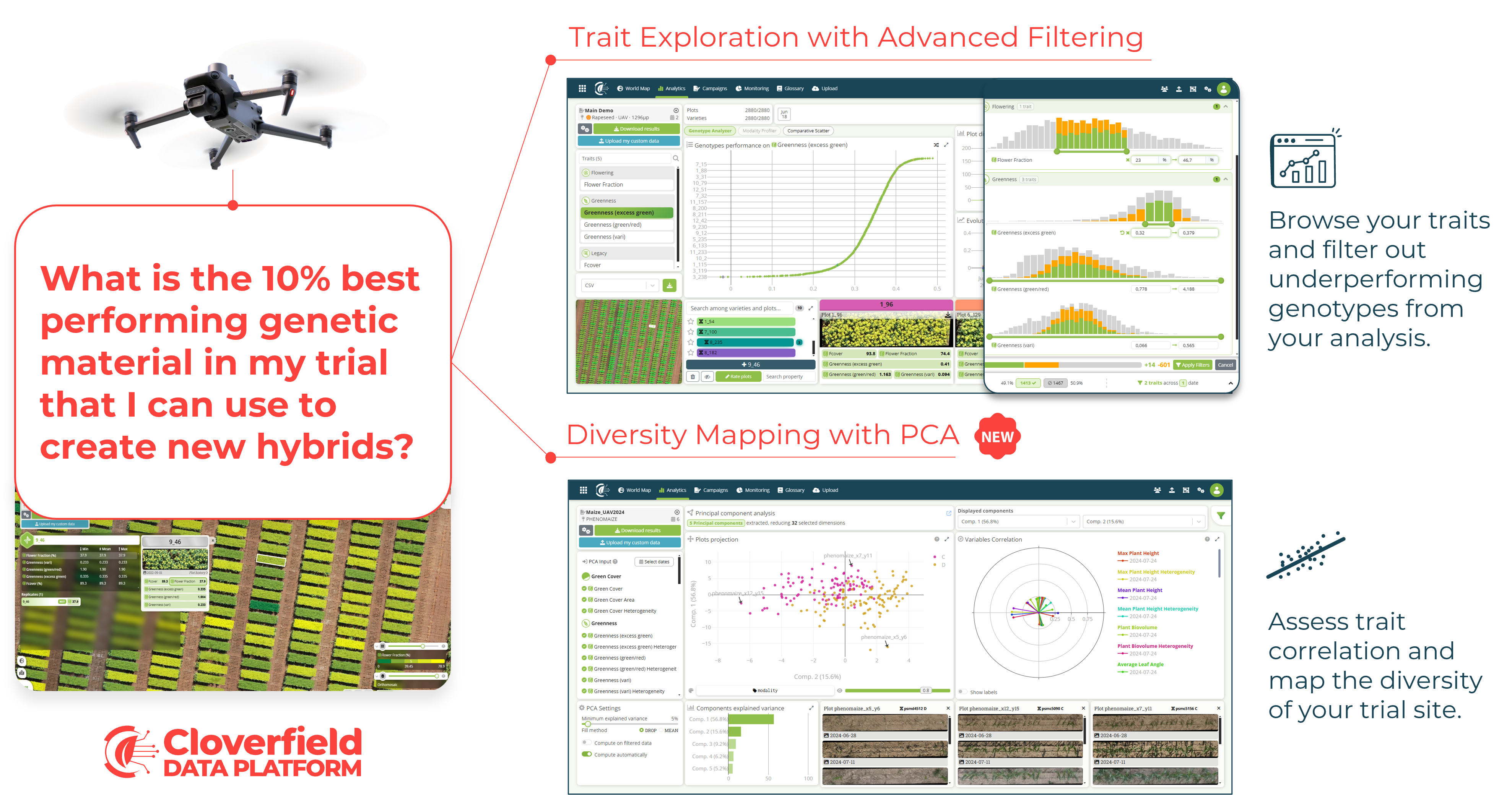
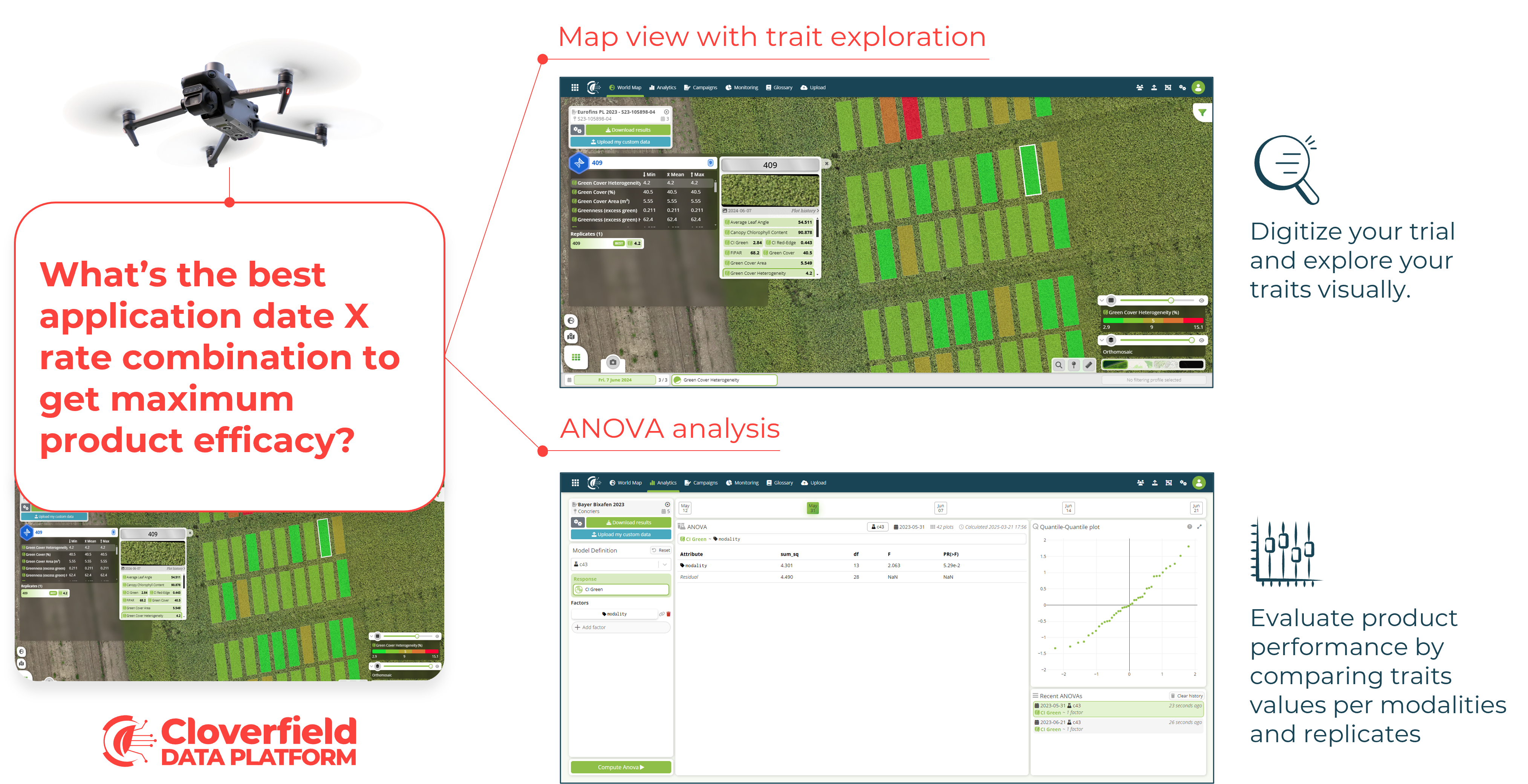
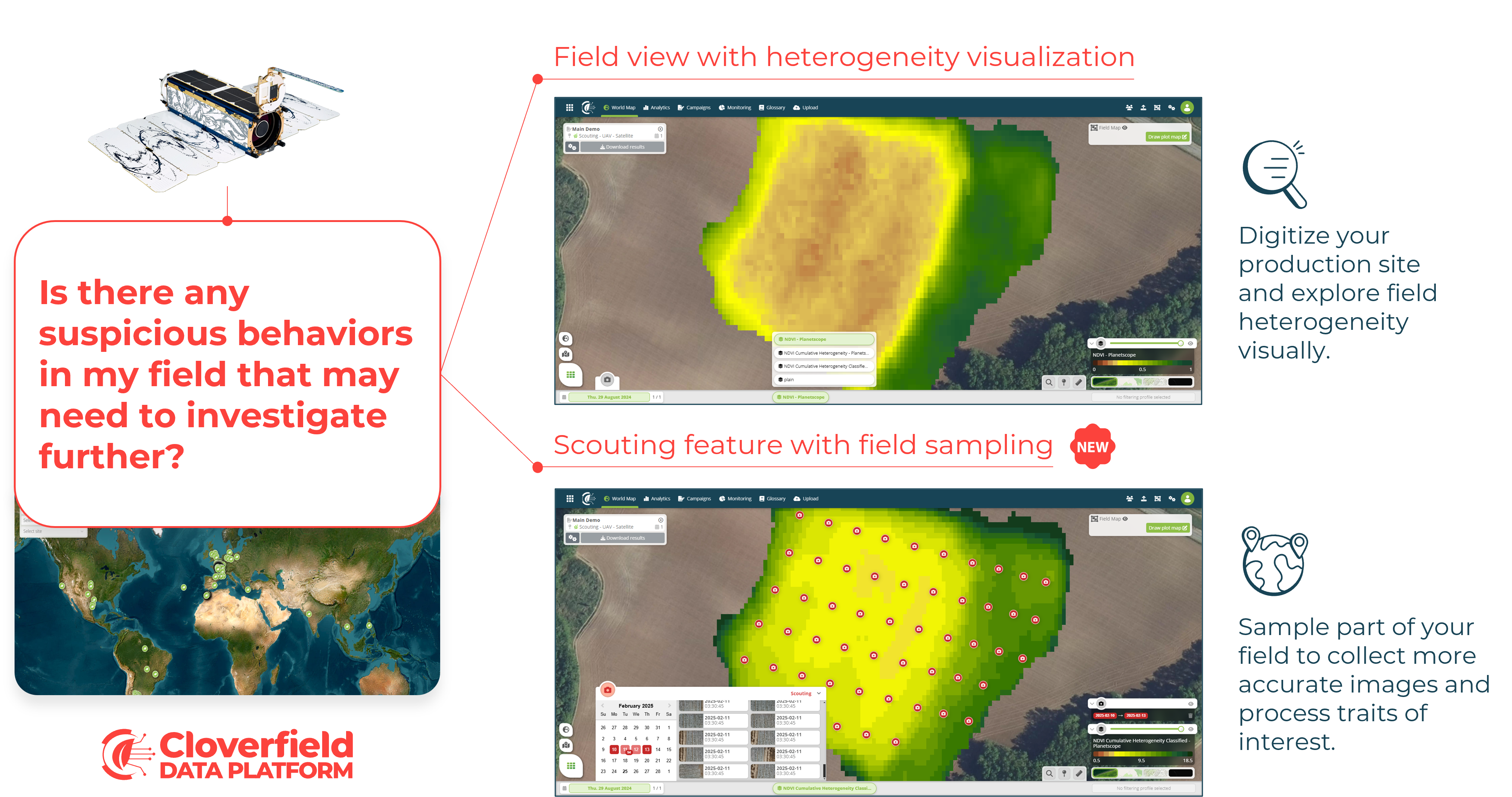
Decision-making data platform: with Cloverfield, Hiphen’s homegrown data platform, we can provide you not only with a frictionless trait extraction experience but also with a powerful and intuitive set of digital tools to inspect your plots and help make decisions on which genetic material to advance or which product modality to eliminate. Features like the image query, the genotype analyzer, the PCA analysis, the ANOVA analysis, the advanced trait filtering and the plot rating tool all help you centralize, standardize and analyze what’s going on in your research plots.
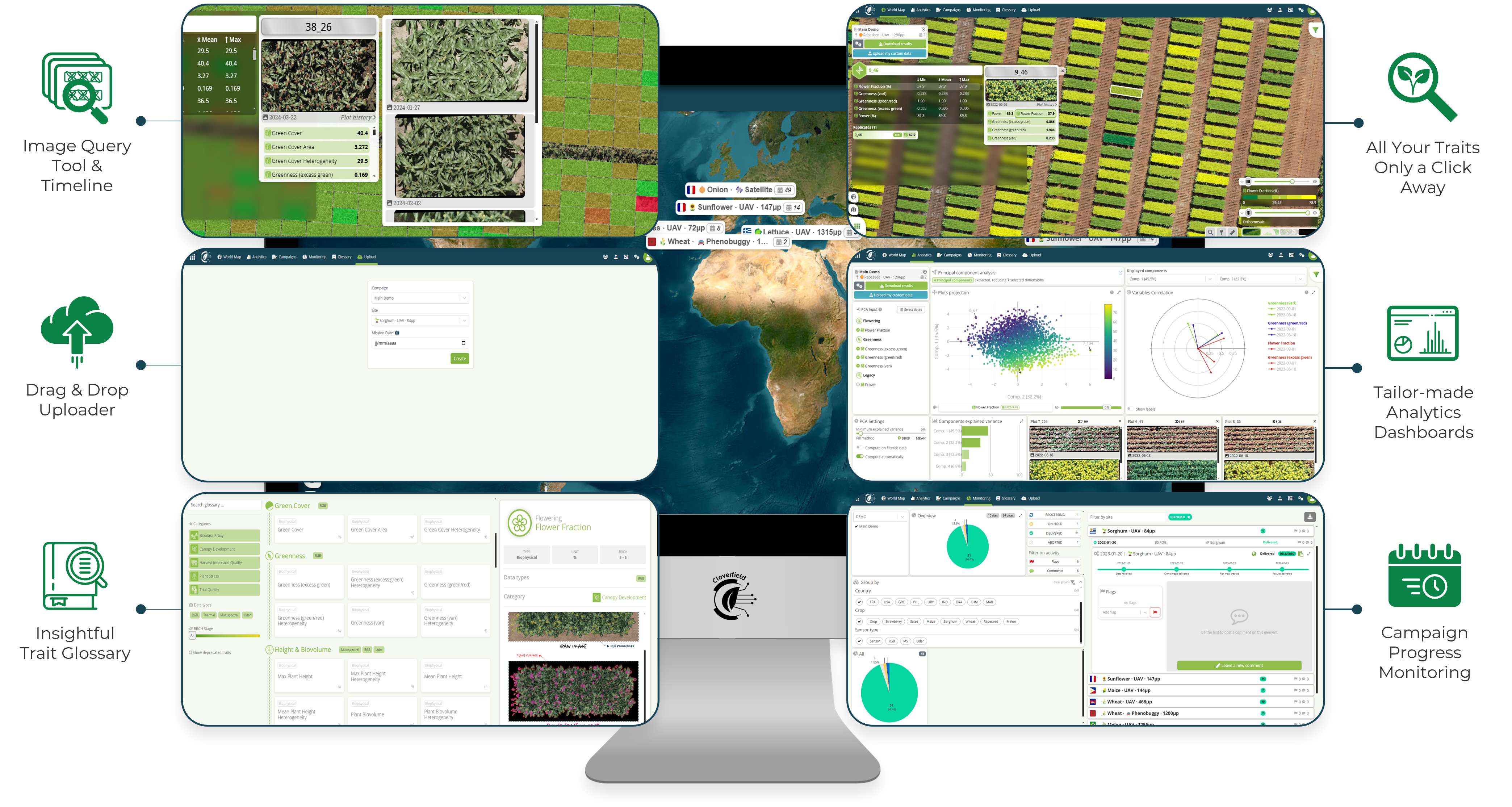
The integration of digital phenotyping into agricultural programs offers several significant advantages:
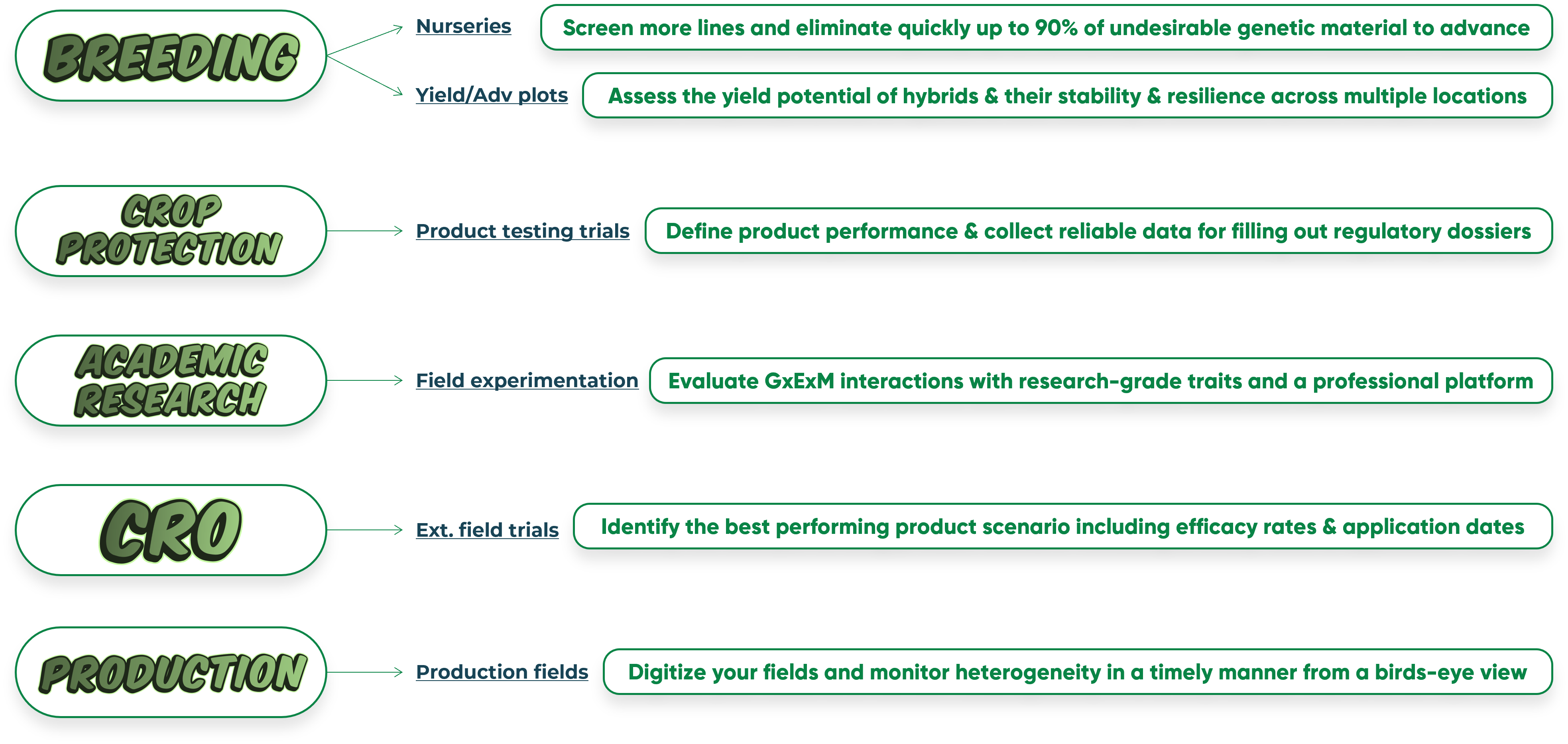
Digital Phenotyping Use Case for Plant Breeders
Digital Phenotyping Use Case for Crop Protection & CROs
Digital Phenotyping Use Case for Production Monitoring
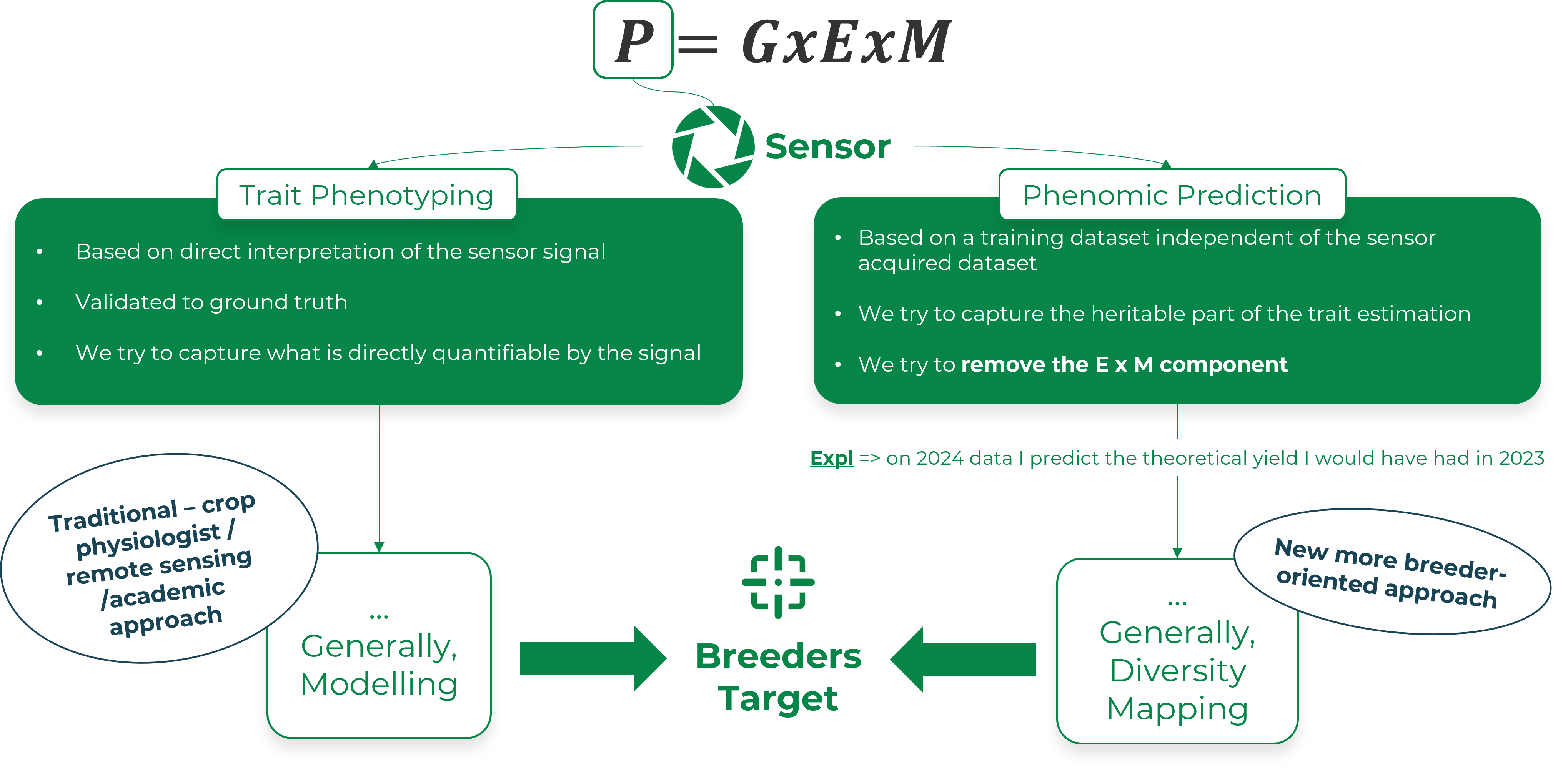
The continuous evolution of digital phenotyping technologies promises to further revolutionize agriculture. With companies like Hiphen leading the charge, the integration of artificial intelligence and high-throughput phenotyping is set to enhance precision agriculture, plant breeding and agricultural product development efforts especially within the realm of predictive breeding and phenomic predictions where a lot of papers are now proving that plant traits can be used as input to predict the characteristics of future hybrids or crosses. Breeding cycles and product development pipelines could then be streamlined and achieved faster and more efficiently than ever.
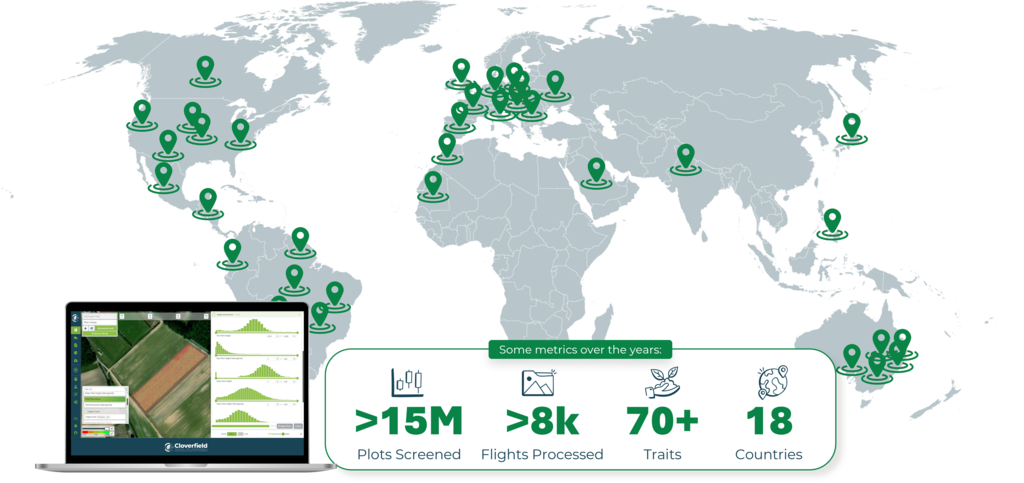
Digital plant phenotyping stands at the forefront of agricultural innovation, offering tools that drive efficiency, sustainability, and productivity. Hiphen strong of his 10+ years’ experience in digital phenotyping on an extensive list of use case position itself as a key player in that space and can help crop researchers to achieve their research ambitions globally.
Ready to transform your crop research? Book a meeting with one of our experts today to discover how Literal can make your life easier, enhance your research, and provide the meaningful data you need to keep advancing your breeding programs and agricultural innovations. Don’t miss the chance to see Literal in action—schedule your demo now or visit our product pages and take the first step toward more efficient, precise, and impactful crop research.
In the rapidly evolving world of agriculture, the pursuit of precision and efficiency is paramount. One of the critical factors in optimizing crop yield is accurately assessing wheat head density, a complex trait that has traditionally posed significant challenges in field conditions. Manual assessment, while historically relied upon, is fraught with errors, inefficiencies, and a high demand for labor. However, advances in image analytics and digital agriculture, particularly through platforms like Literal, are revolutionizing this process, offering promising solutions to improve the accuracy, efficiency, and overall effectiveness of wheat head density assessments.
Wheat head density is a crucial determinant of crop yield potential. It refers to the number of wheat heads per unit area in a field, which correlates directly with the potential yield of the crop. However, accurately estimating this trait in the field is challenging due to various factors. Variability in environmental conditions, differences in wheat cultivars, and the subjective nature of manual counting contribute to significant errors in traditional assessment methods. Moreover, manual assessment is labor-intensive, requiring a large number of operators to cover extensive trial areas, which further increases the potential for inconsistencies and inaccuracies.
Literal, an advanced image analytics tool, offers a cutting-edge solution to these challenges. By leveraging advanced image processing algorithms, Literal enables the assessment of wheat head density at multiple scales—from individual images to entire plots and/or trials. This capability not only enhances the accuracy of assessments but also significantly reduces the time and labor required.
Literal's approach involves capturing high-resolution images of wheat fields, which are then analyzed using machine learning algorithms trained to recognize and count wheat heads accurately. The beauty of this system lies in its scalability; it can be applied at different levels, from assessing small plot samples to evaluating entire fields and trials. This scalability ensures that wheat head density assessments are consistent and reliable, regardless of the size of the operation.
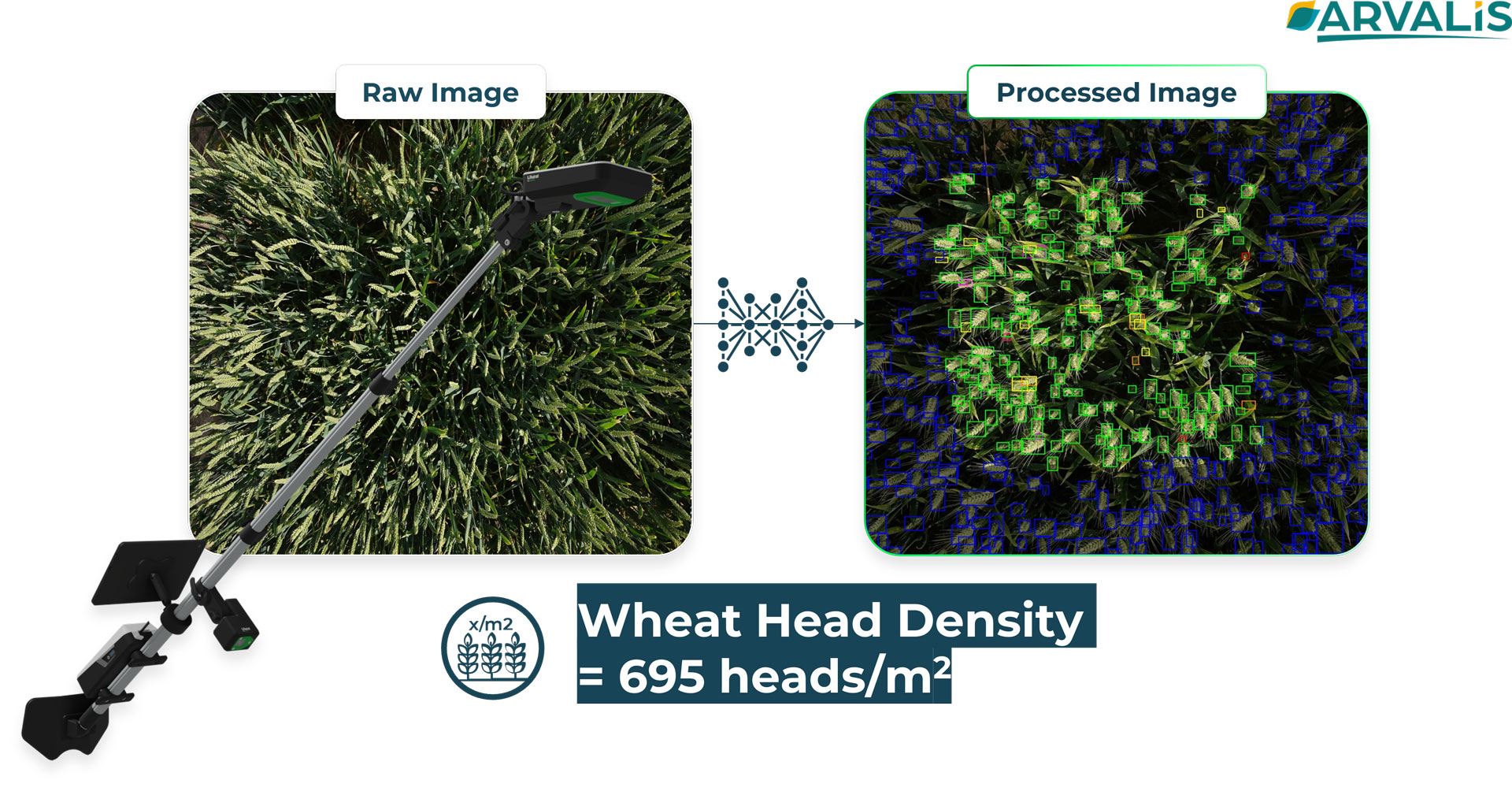
One of the most significant advantages of using Literal for wheat head density estimation is its ability to reduce errors by 50% compared to manual scoring. Traditional manual assessments are prone to human error, especially in large-scale trials where the sheer volume of data can lead to fatigue and inconsistency among operators. Literal's automated image analysis mitigates these issues by providing consistent, objective measurements that are not influenced by external factors such as operator fatigue or environmental conditions.
Moreover, Literal is designed to be highly efficient, allowing for the reduction of the number of operators needed depending on your use case and trial size, since only 1 operator is needed to operate the system and collect data on hundreds of plots every day. In large-scale trials, this reduction in labor can translate to significant cost savings and a more streamlined assessment process. Fewer operators mean less variability in data collection, further enhancing the reliability of the results.
Another critical benefit of using Literal is the increase in trait heritability by 10%* compared to manual scoring. Heritability, in this context, refers to the proportion of variation in wheat head density that can be attributed to genetic differences rather than environmental factors. By providing more accurate and consistent measurements, Literal enables breeders and researchers to make better-informed decisions about which traits to select for in breeding programs, ultimately leading to the development of higher-yielding wheat varieties.
*from the study below, based on a comparison of wheat head density assessment with Literal vs manual methods.
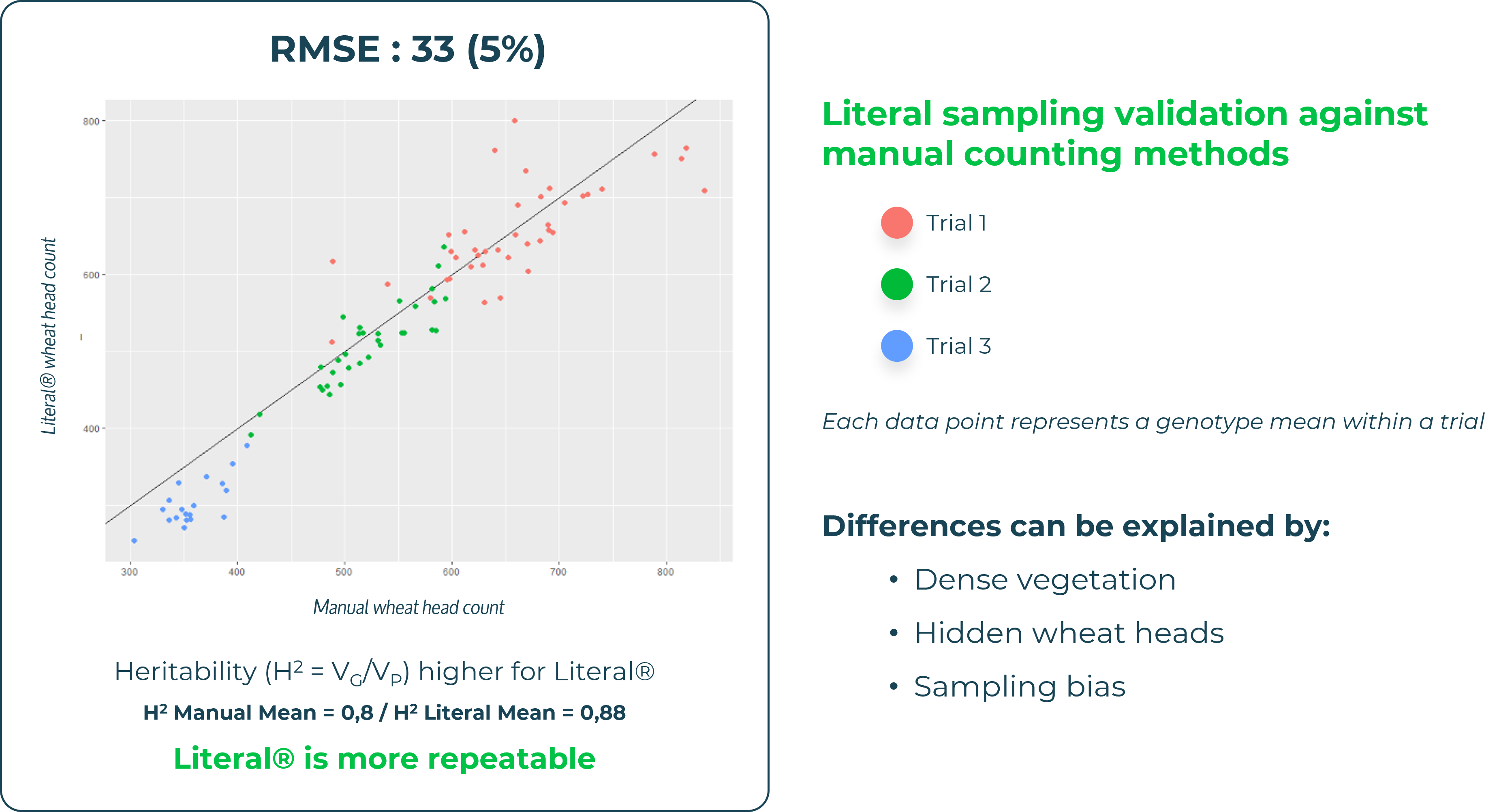
Literal's image analytics platform significantly improves wheat head density assessment accuracy by reducing errors by 50% compared to manual methods.
The tool help cutting the required labor whatever your use case and trial size, streamlining operations and optimizing resource allocation.
Increased heritability of traits by 10% enables more effective breeding decisions, leading to higher-yielding crops.
The scalability of Literal's solutions allows for consistent assessments across various crops & scales, from small plots to large trials.
Literal's approach supports the broader goals of precision agriculture, contributing to sustainable and productive agricultural practices.
What sets Literal® apart from other plant phenotyping tools?
Literal® distinguishes itself through its focus on precision phenotyping, offering highly accurate and repeatable assessments of plant traits that are essential for understanding plant physiology.
How does Literal® improve the accuracy of field trials?
Literal® enhances field trials by providing detailed and reliable trait assessments that allow researchers to make accurate comparisons and informed decisions about plant performance under various conditions.
Can Literal® be used for large-scale breeding programs?
Yes, Literal® is designed to support large-scale breeding programs by providing consistent and precise data across different environments and trials, you can build your Literal fleet to meet your needs, making it ideal for extensive breeding efforts.
How does Literal® support sustainable agriculture?
Literal® contributes to sustainable agriculture by enabling the development of crops that are more resilient to environmental stressors and by supporting precision agriculture techniques that optimize resource use.
Is Literal® suitable for both research and commercial applications?
Absolutely. Literal® is versatile enough to be used in both academic research and commercial breeding programs, making it a valuable tool for anyone involved in crop research or development or product testing.
What kind of data can Literal® collect?
Literal® collects detailed data on a wide range of plant traits, including growth rates, leaf area, chlorophyll content, and responses to environmental stressors, providing a comprehensive understanding of plant physiology.
Ready to transform your crop research? Book a meeting with one of our experts today to discover how Literal can make your life easier, enhance your research, and provide the meaningful data you need to keep advancing your breeding programs and agricultural innovations. Don't miss the chance to see Literal in action—schedule your demo now or visit our product page and take the first step toward more efficient, precise, and impactful crop research.
Speak soon,
Your Hiphen Team
[Literal® technology under license from Arvalis]
In the field of crop research, accurate and consistent data collection is the cornerstone of successful breeding programs and agricultural innovation. Yet, many researchers still rely on manual assessments—a method that, while traditional, is fraught with challenges. From the variability of human interpretation to the lack of data traceability, manual methods often fall short in providing the precise, repeatable, and reliable data necessary for modern crop research.
Discover Literal, an all-in-one phenotyping solution that automates the complex task of plant trait assessment. Literal is designed to not only simplify the data collection process but also to ensure that the data gathered is of the highest quality—consistent, repeatable, and easily accessible. In this blog post, we'll explore how Literal compares to manual assessment methods, particularly in the context of plot quality evaluation, and why it represents a significant leap forward for plant breeders and crop researchers globally.
Manual assessments have been the standard in crop research for decades. The process usually involves sending multiple operators into the field, where they manually score plot quality based on visual inspection and personal judgment. While this method has the advantage of being straightforward and low-tech, it is also riddled with drawbacks that can compromise the accuracy and utility of the data collected.
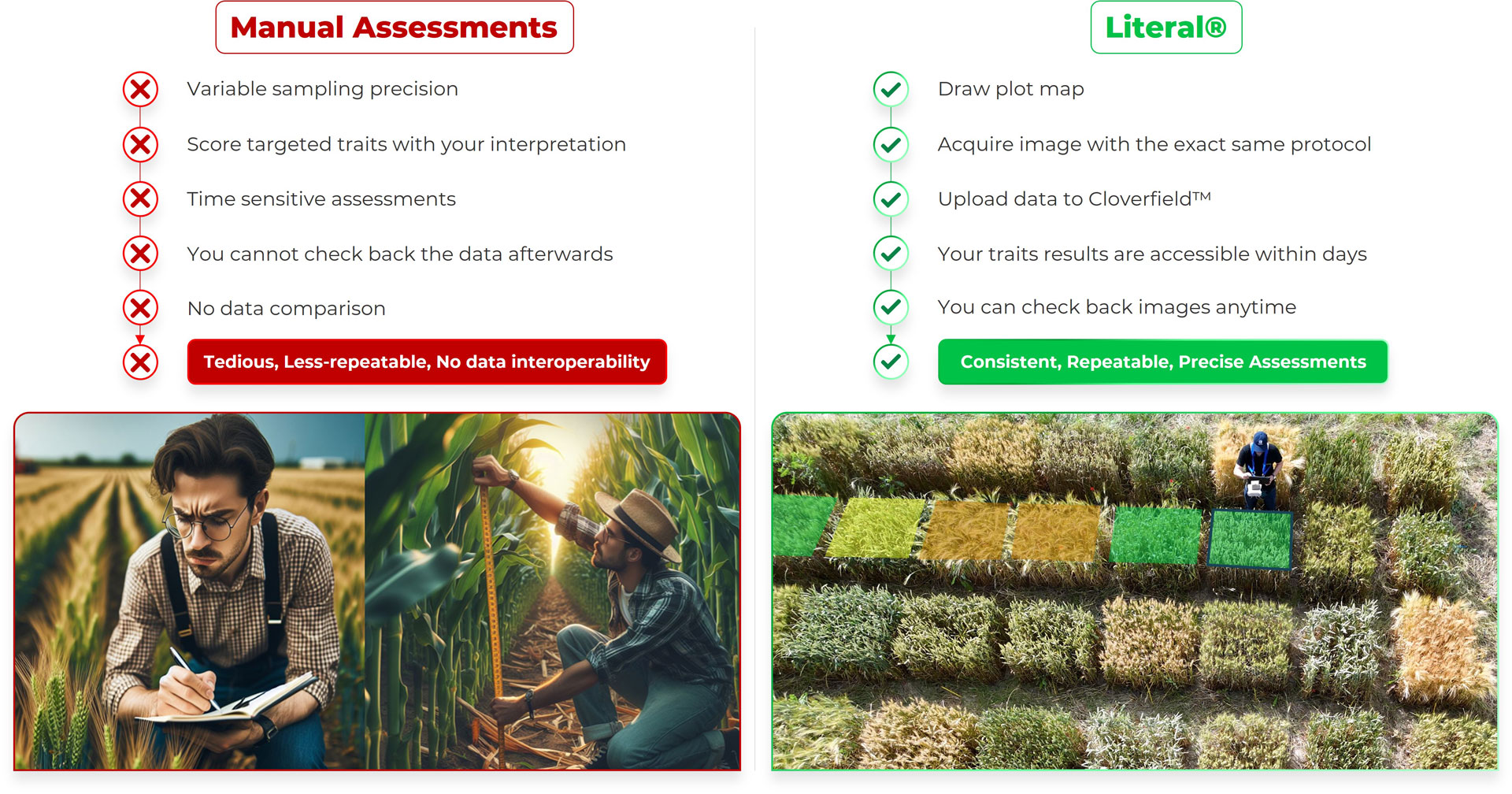
One of the biggest issues with manual assessments is the variability introduced by human operators. Each person may interpret plot quality differently, leading to inconsistent data that is difficult to compare or analyze. Additionally, manual methods offer no way to revisit or validate the data once it's been collected—what's recorded in the field is all you have to work with. This lack of traceability means that if questions arise later, there’s no raw data to refer back to.
Furthermore, manual assessments are labor-intensive and time-consuming. Multiple operators are often required to cover large fields, and the process can take days or even weeks to complete, depending on the scale of the trial. This not only slows down research but also introduces more opportunities for error and variability.
In contrast, Literal offers a modern, automated alternative that addresses these issues head-on, providing a more efficient, accurate, and reliable method for assessing plot quality and other plant traits.
To truly understand the advantages of Literal over traditional manual assessments, let's compare the two methods in several key areas:
| Criteria | Manual Assessments | Literal |
|---|---|---|
| Operator Requirements | Multiple operators needed, increasing variability | Single operator required, ensuring optimal resource allocation |
| Data Collection Process | Subjective, based on human interpretation | Objective, using standardized protocols |
| Data Consistency | Variability between operators and over time, often leading to less precise data | High consistency across all plots and dates, ensuring data accuracy |
| Data Traceability | No way to revisit or validate data afterwards | Data is stored and can be reviewed later, including raw images |
| Data Processing Time | Days to weeks, dependent on workload | Automated processing pipelines, near real-time processing, results available within days |
| Data Accessibility | Limited, usually paper-based or in isolated files | Centralized digital storage, accessible via a secured online platform |
| Time Series Analysis | Challenging, often due to the lack of comparable data points | Automated with consistent data collected across multiple time points |
| Cost and Efficiency | Labor-intensive, time-consuming, and potentially costly | Efficient, with reduced labor needs and faster processing |
| Interoperability | Hard to integrate with other data or systems | High interoperability, allowing for easy data integration through APIs |
| Validation Options | Limited to manual checks | Can be complemented with manual sampling for additional validation |
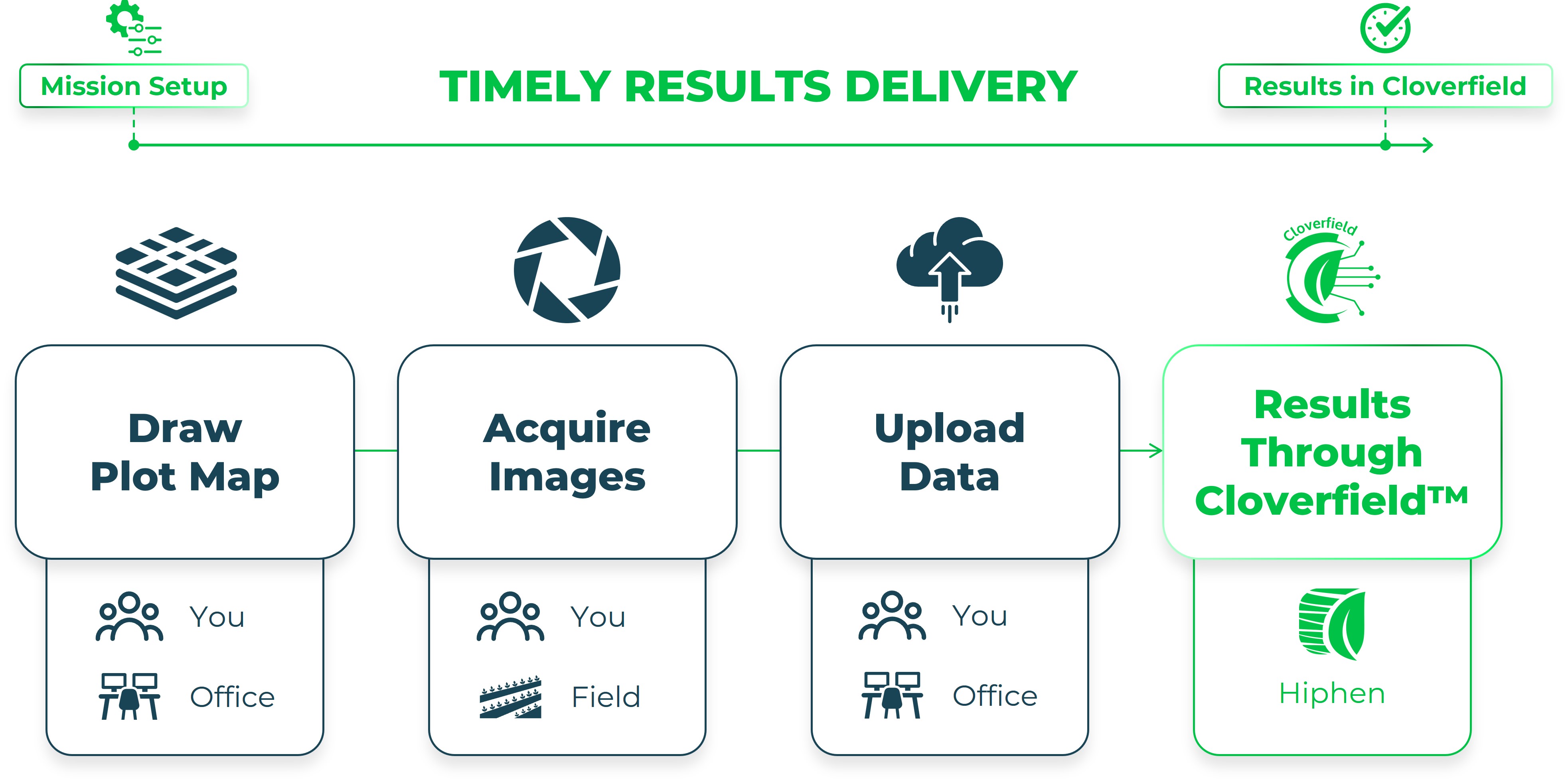
Literal is designed to address the limitations of manual assessments by providing a streamlined, automated approach to plant trait detection, classification, and quantification. With Literal, a single operator equipped with one unit can gather consistent, high-resolution data across hundreds of plots per day, using pre-defined sampling and acquisition protocols that eliminate human error and variability.
The data collected by Literal is stored securely, allowing researchers to revisit and reanalyze it as needed. This traceability is crucial for validating results and ensuring that research conclusions are based on accurate, verifiable data. Moreover, because traits are processed in near real-time, researchers can access results quickly—often within days—enabling them to make timely decisions that can significantly impact the success of their trials.
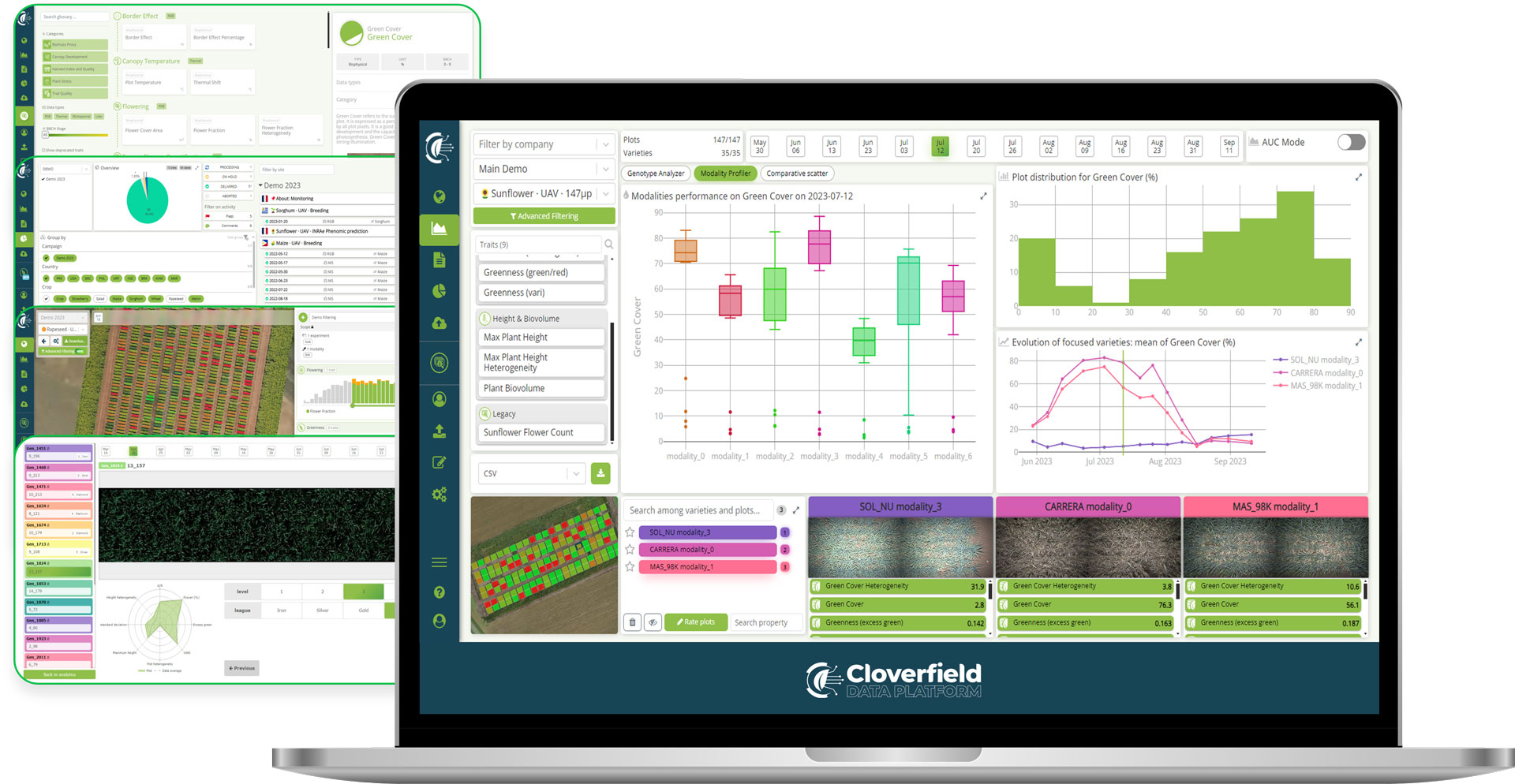
In addition to its core capabilities, Literal data comes to life in Cloverfield, our homegrown phenotyping data platform offering powerful tools for time series analysis, allowing researchers to compare the performance of different genotypes or treatment modalities over time. This feature is particularly valuable in understanding genotype-environment (GxE) interactions and the impact of various inputs on crop performance. The ability to easily access and analyze consistent, high-quality data over multiple time points is a game-changer for crop researchers looking to optimize their breeding programs and product development efforts.
Another significant advantage of Literal is its data interoperability. The platform’s centralized, digital storage system makes it easy to integrate data with other research tools and systems, facilitating broader analysis and collaboration. This interoperability enhances the overall efficiency of research projects, reducing redundancy and improving the quality of the insights generated.
Finally, while Literal excels in automated assessments, it also allows for manual sampling across trials for additional validation. This hybrid approach ensures that researchers can have the best of both worlds: the precision and consistency of automated data collection, combined with the flexibility to perform manual checks when necessary.
What sets Literal® apart from other plant phenotyping tools?
Literal® distinguishes itself through its focus on precision phenotyping, offering highly accurate and repeatable assessments of plant traits that are essential for understanding plant physiology.
How does Literal® improve the accuracy of field trials?
Literal® enhances field trials by providing detailed and reliable trait assessments that allow researchers to make accurate comparisons and informed decisions about plant performance under various conditions.
Can Literal® be used for large-scale breeding programs?
Yes, Literal® is designed to support large-scale breeding programs by providing consistent and precise data across different environments and trials, you can build your Literal fleet to meet your needs, making it ideal for extensive breeding efforts.
How does Literal® support sustainable agriculture?
Literal® contributes to sustainable agriculture by enabling the development of crops that are more resilient to environmental stressors and by supporting precision agriculture techniques that optimize resource use.
Is Literal® suitable for both research and commercial applications?
Absolutely. Literal® is versatile enough to be used in both academic research and commercial breeding programs, making it a valuable tool for anyone involved in crop research or development or product testing.
What kind of data can Literal® collect?
Literal® collects detailed data on a wide range of plant traits, including growth rates, leaf area, chlorophyll content, and responses to environmental stressors, providing a comprehensive understanding of plant physiology.
Ready to transform your crop research? Book a meeting with one of our experts today to discover how Literal can make your life easier, enhance your research, and provide the meaningful data you need to keep advancing your breeding programs and agricultural innovations. Don’t miss the chance to see Literal in action—schedule your demo now or visit our product page and take the first step toward more efficient, precise, and impactful crop research.
Speak soon,
Your Hiphen Team
[Literal® technology under license from Arvalis]
In the world of crop research, precision and reliability are everything. The ability to accurately measure plant traits, especially those that are challenging to capture manually, is crucial for assessing yield potential and response to stresses to drive innovation in plant breeding and product development. Yet, traditional methods often fall short, particularly when it comes to traits like wheat head count—a highly valuable metric for grain breeders. Enter Literal, a breakthrough phenotyping tool that not only automates these hard-to-access traits but also does so at a fraction of the cost of other high-resolution technologies. In a field where the stakes are high, Literal offers a solution that is both affordable and effective, setting a new standard for crop researchers worldwide.
In the competitive world of plant breeding and agricultural research, precision and efficiency are paramount. Understanding how different genotypes perform under various environmental conditions—and how they react to specific agricultural inputs—can make the difference between success and failure in developing the next generation of crops. To meet these challenges, researchers need tools that can provide consistent, high-quality data quickly and efficiently. This is where Literal comes in.
Literal is not just another phenotyping tool; it's an all-in-one solution designed to automate the complex process of plant trait detection, classification, and quantification. By combining state-of-the-art hardware with user-friendly, integrated software, Literal enables researchers to gather precise data across a wide range of crops, helping them to focus on their core research tasks. In this blog post, we'll delve into what Literal is composed of, explore the key features of both the hardware and software components, and explain why Literal is revolutionizing the way plant traits are assessed.
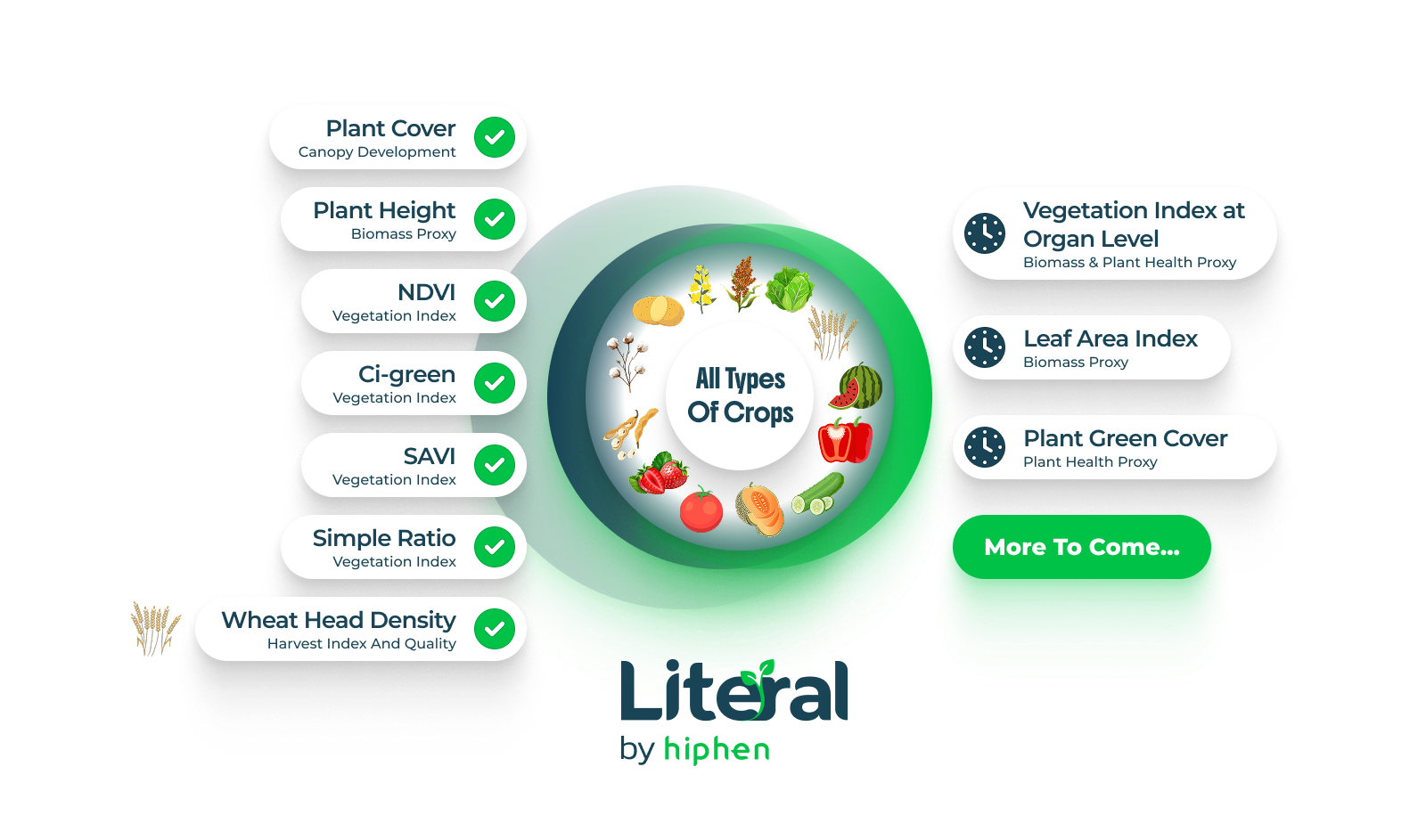
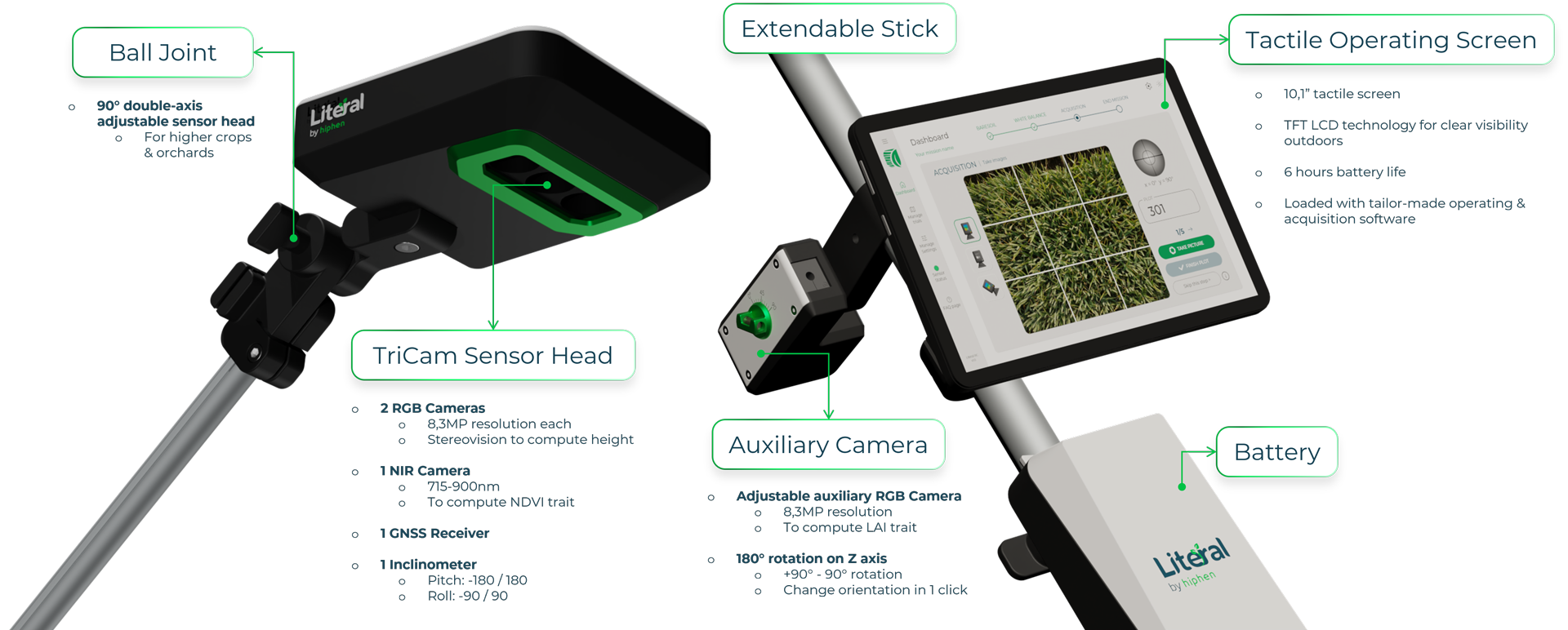
At the heart of Literal’s system is its robust hardware, meticulously designed to meet the demands of high-resolution plant trait assessment. Whether you're working in a controlled environment like a greenhouse or out in the field, Literal’s hardware is engineered to deliver accurate and reliable data under a variety of conditions.
High-Resolution Imaging Sensors
The cornerstone of Literal’s hardware is its suite of high-resolution imaging sensors. These sensors are capable of capturing detailed images of plant features, enabling the detection and quantification of traits that are difficult or impossible to assess manually. With the ability to capture images at multiple wavelengths, Literal’s sensors provide a comprehensive view of plant physiology, from visible traits like leaf area and color to less obvious indicators such as chlorophyll content and water stress.
Rugged Design for Field Use
Literal’s hardware is built to withstand the rigors of fieldwork. The imaging units are housed in rugged, weather-resistant enclosures, ensuring that they can operate reliably in various environmental conditions, whether you're dealing with dust, rain, or extreme temperatures. This durability makes Literal an ideal choice for researchers who need consistent data collection in challenging field conditions.
Versatile and Scalable
Another key feature of Literal’s hardware is its portability. The system is designed to be easy to transport and set up, allowing researchers to deploy it in different locations as needed. Whether you’re moving between test plots or taking your research on the road, Literal’s hardware can be quickly reassembled, making it a versatile tool for dynamic research environments. Moreover, the system is scalable, meaning you can start with a basic setup and add additional components as your research needs grow.
Literal’s Software: Integrated, Intuitive, and Powerful
While the hardware captures the raw data, Literal’s integrated software is where the magic happens. Designed to work seamlessly with the imaging sensors, the software provides a comprehensive suite of tools for automating the detection, classification, and quantification of plant traits.
User-Friendly Interface
Literal’s software is built with the user in mind. Its intuitive interface requires no specialized training to operate, making it accessible to researchers of all experience levels. The software guides users through the process of setting up trait assessments, adjusting parameters, and initiating data collection. This ease of use allows researchers to focus on their experiments rather than getting bogged down in complex technical details.
Automated Trait Detection and Classification
One of the most powerful features of Literal’s software is its ability to automatically detect and classify plant traits from the high-resolution imagery captured by the hardware. The software uses advanced algorithms to analyze images, identifying key traits such as leaf count, plant height, and disease symptoms. This automation significantly reduces the time and effort required to assess complex traits, enabling researchers to process large volumes of data quickly and accurately.
Near Real-Time Data Processing
In agricultural research, timing is everything. Literal’s software includes near real-time data processing capabilities, allowing researchers to get insights into plant traits within a day after the data is collected. This rapid turnaround is particularly valuable during critical stages of the growing season when timely decisions can have a significant impact on the outcomes of field trials. With Literal, researchers can react quickly to emerging trends and adjust their strategies accordingly.
Centralized Data Management
Literal’s data come to life in Cloverfield – Hiphen's homegrown phenotyping data platform. It's centralizing all trait data in one secure, easily accessible location. This centralized approach simplifies data analysis, sharing and linking with APIs, making it easier for research teams to collaborate and draw meaningful conclusions from their traits analytics. Whether you’re conducting a single field trial or managing multiple experiments across different locations, Literal ensures that all your data is organized and readily available for analysis.
Literal represents a significant advancement in the field of plant phenotyping, offering a complete solution for automating the assessment of complex plant traits. By combining high-resolution imaging hardware with powerful, easy-to-use software, Literal enables researchers to gather precise, consistent data with minimal effort. This all-in-one system is designed to meet the needs of plant breeders and agricultural product developers, helping them to understand the impact of environmental factors on genotype performance and to make data-driven decisions that will shape the future of agriculture.
Whether you’re assessing the performance of a new crop variety against elite competitors or evaluating the impact of different agricultural inputs, Literal provides the tools you need to succeed. Its robust hardware ensures that you can collect high-quality data under any conditions, while its integrated software automates the complex process of trait detection and quantification. With Literal, you can focus on your research work, confident that your data is accurate, reliable, and readily available for analysis.
What sets Literal® apart from other plant phenotyping tools?
Literal® distinguishes itself through its focus on precision phenotyping, offering highly accurate and repeatable assessments of plant traits that are essential for understanding plant physiology.
How does Literal® improve the accuracy of field trials?
Literal® enhances field trials by providing detailed and reliable trait assessments that allow researchers to make accurate comparisons and informed decisions about plant performance under various conditions.
Can Literal® be used for large-scale breeding programs?
Yes, Literal® is designed to support large-scale breeding programs by providing consistent and precise data across different environments and trials, you can build your Literal fleet to meet your needs, making it ideal for extensive breeding efforts.
How does Literal® support sustainable agriculture?
Literal® contributes to sustainable agriculture by enabling the development of crops that are more resilient to environmental stressors and by supporting precision agriculture techniques that optimize resource use.
Is Literal® suitable for both research and commercial applications?
Absolutely. Literal® is versatile enough to be used in both academic research and commercial breeding programs, making it a valuable tool for anyone involved in crop research or development.
What kind of data can Literal® collect?
Literal® collects detailed data on a wide range of plant traits, including growth rates, leaf area, chlorophyll content, and responses to environmental stressors, providing a comprehensive understanding of plant physiology.
Ready to see how Literal can transform your research? Book a meeting with one of our experts today to learn more about how this innovative tool can help you achieve your research objectives. Discover the difference that high-resolution phenotyping can make in your breeding programs and input product testing – schedule your demo now or visit our product page to know more.
Speak soon,
Your Hiphen Team
[Literal® technology under license from Arvalis]
In the world of crop research, precision and reliability are everything. The ability to accurately measure plant traits, especially those that are challenging to capture manually, is crucial for assessing yield potential and response to stresses to drive innovation in plant breeding and product development. Yet, traditional methods often fall short, particularly when it comes to traits like wheat head count—a highly valuable metric for grain breeders. Enter Literal, a breakthrough phenotyping tool that not only automates these hard-to-access traits but also does so at a fraction of the cost of other high-resolution technologies. In a field where the stakes are high, Literal offers a solution that is both affordable and effective, setting a new standard for crop researchers worldwide.
Plant breeders and crop researchers face enormous challenges when it comes to phenotyping, the process of measuring and analyzing observable plant traits. The accuracy of this data is directly tied to the success of breeding programs and agricultural product development.
One of the most critical yet tedious tasks in cereal breeding is wheat head counting. This trait is a key indicator of yield potential in genotypes, making it a focal point for researchers. However, traditional manual counting methods are not only labor-intensive but also prone to inconsistency and human error. As a result, the need for automation and precision in phenotyping has never been more pressing.
This is where Literal comes in, addressing the industry's demand for an affordable, high-resolution phenotyping tool that automates the capture of these vital traits. Literal is designed to deliver the precision and consistency that traditional methods lack, ensuring that researchers can trust the data they gather to make informed decisions. But how does Literal stack up against other phenotyping tools currently available on the market? Let's explore.
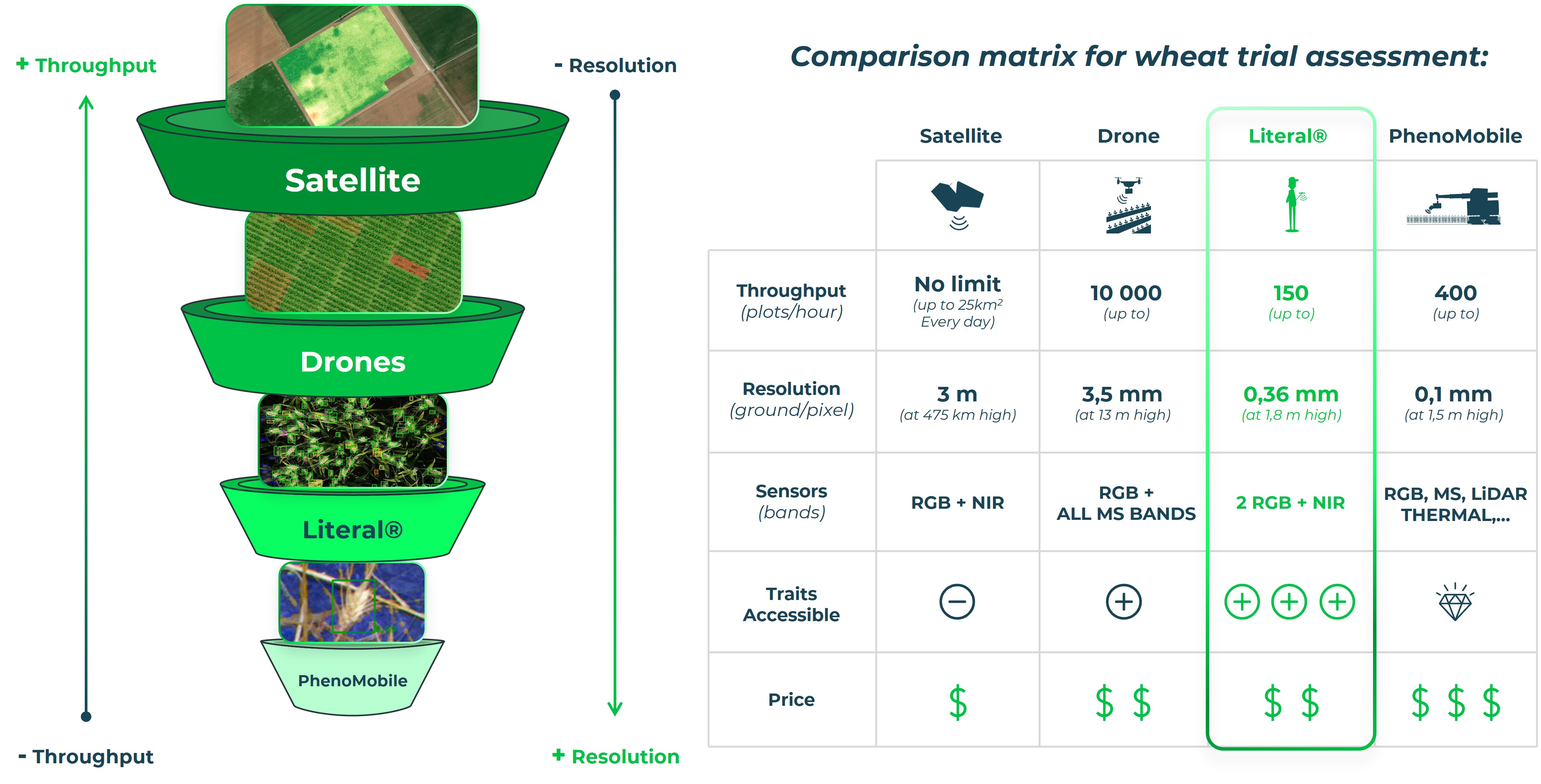
Drones have become a popular tool in agricultural research, particularly for phenotyping large fields. They offer the advantage of being able to cover vast areas quickly, providing an aerial view that can be useful for capturing certain traits like canopy cover and plant height. However, when it comes to high-resolution phenotyping, drones fall short. The resolution offered by drones is generally lower than what is required for accurately capturing complex traits such as wheat head count.
Drones typically offer standard trait measurements and struggle to capture the finer details needed for precise phenotyping. While they are useful for broad assessments, they lack the ability to drill down into the specific traits that are critical for yield assessment. This limitation makes drones less suitable for researchers who need to capture high-resolution data on specific plant traits.
Literal, on the other hand, excels in this area. By focusing on high-resolution imaging and automating the collection of complex traits, Literal provides the detailed data needed for accurate phenotyping. Unlike drones, which may miss these subtle details due to their broader focus, Literal homes in on the precise measurements that matter most. Moreover, Literal is significantly more affordable than deploying a fleet of drones, making it an attractive option for research institutions with limited budgets.
PhenoMobiles, or tractor-mounted sensor arrays with processing units, represent another advanced option in the world of phenotyping. These units can be equipped with an array of sensors that cover the entire imaging spectrum, providing comprehensive data analytics on a wide range of plant traits. In terms of resolution, PhenoMobiles perform on par with Literal, offering the high level of detail necessary for traits like wheat head count.
However, this level of sophistication comes at a significant cost. PhenoMobiles are at least five times more expensive than Literal, making it out-of-reach for many research institutions around the globe. While they offer the advantage of unlimited sensor capacity, this benefit may be overkill for researchers who need precise data on specific traits rather than a broad-spectrum analysis.
Literal strikes a balance between performance and affordability. It provides the high-resolution data needed for accurate phenotyping at a fraction of the price. For researchers focused on specific traits related to proxy of yield, Literal offers a cost-effective solution that doesn't compromise on quality. This makes it an ideal choice for breeding programs and agricultural research projects that require detailed, reliable data without breaking the bank.
The introduction of Literal marks a significant shift in the field of crop research. By making high-resolution phenotyping more accessible and affordable, Literal is enabling researchers to automate the capture of critical plant traits with a level of precision and consistency that was previously unattainable. Whether you're a plant breeder working to develop the next generation of high-yield crops or a researcher focused on improving the efficiency of agricultural production, Literal offers the tools you need to succeed.
While drones and PhenoMobiles have their place in the world of phenotyping, Literal fills a crucial gap by providing a high-resolution, affordable solution that is specifically designed for capturing complex plant traits. It bridges the divide between traditional manual methods, which are often inconsistent and labor-intensive, and high-cost technologies that, while effective, are not always within reach for every research budget.
Literal's focus on precision, affordability, and automation makes it a standout option in the competitive landscape of phenotyping tools for crop research and experimentation. It provides the detailed data necessary for making informed decisions about plant breeding and crop development, helping researchers achieve their goals more efficiently and effectively. With Literal, you no longer have to choose between quality and cost—you can have both.
What sets Literal® apart from other plant phenotyping tools?
Literal® distinguishes itself through its focus on precision phenotyping, offering highly accurate and repeatable assessments of plant traits that are essential for understanding plant physiology.
How does Literal® improve the accuracy of field trials?
Literal® enhances field trials by providing detailed and reliable trait assessments that allow researchers to make accurate comparisons and informed decisions about plant performance under various conditions.
Can Literal® be used for large-scale breeding programs?
Yes, Literal® is designed to support large-scale breeding programs by providing consistent and precise data across different environments and trials, you can build your Literal fleet to meet your needs, making it ideal for extensive breeding efforts.
How does Literal® support sustainable agriculture?
Literal® contributes to sustainable agriculture by enabling the development of crops that are more resilient to environmental stressors and by supporting precision agriculture techniques that optimize resource use.
Is Literal® suitable for both research and commercial applications?
Absolutely. Literal® is versatile enough to be used in both academic research and commercial breeding programs, making it a valuable tool for anyone involved in crop research or development.
What kind of data can Literal® collect?
Literal® collects detailed data on a wide range of plant traits, including growth rates, leaf area, chlorophyll content, and responses to environmental stressors, providing a comprehensive understanding of plant physiology.
Ready to see how Literal can transform your research? Book a meeting with one of our experts today to learn more about how this innovative tool can help you achieve your research objectives. Discover the difference that high-resolution phenotyping can make in your breeding programs and input product testing – schedule your demo now or visit our product page to know more.
Speak soon,
Your Hiphen Team
[Literal® technology under license from Arvalis]
In the ever-evolving landscape of agriculture, the ability to gather precise, data-driven insights is a game-changer for plant breeders, agricultural product developers, and crop researchers. Enter Literal® a cutting-edge phenotyping tool that elevates plant trait assessment to a new level of accuracy. Literal® is more than just a tool; it's a breakthrough in how we understand and manage plant physiology, enabling you to uncover the critical traits that drive success in breeding and input product development.
Literal® stands out by delivering precise, repeatable data on plant traits, allowing you to make informed decisions based on a deep understanding of plant physiology. Whether you're working to breed the next generation of resilient crops or to evaluate the performance of new agricultural products, it offers the reliability and precision necessary to succeed in the complex world of crop research.
With Literal®, you gain unprecedented clarity into plant physiology, empowering you to make the most informed and impactful decisions for your breeding programs and agricultural innovations.
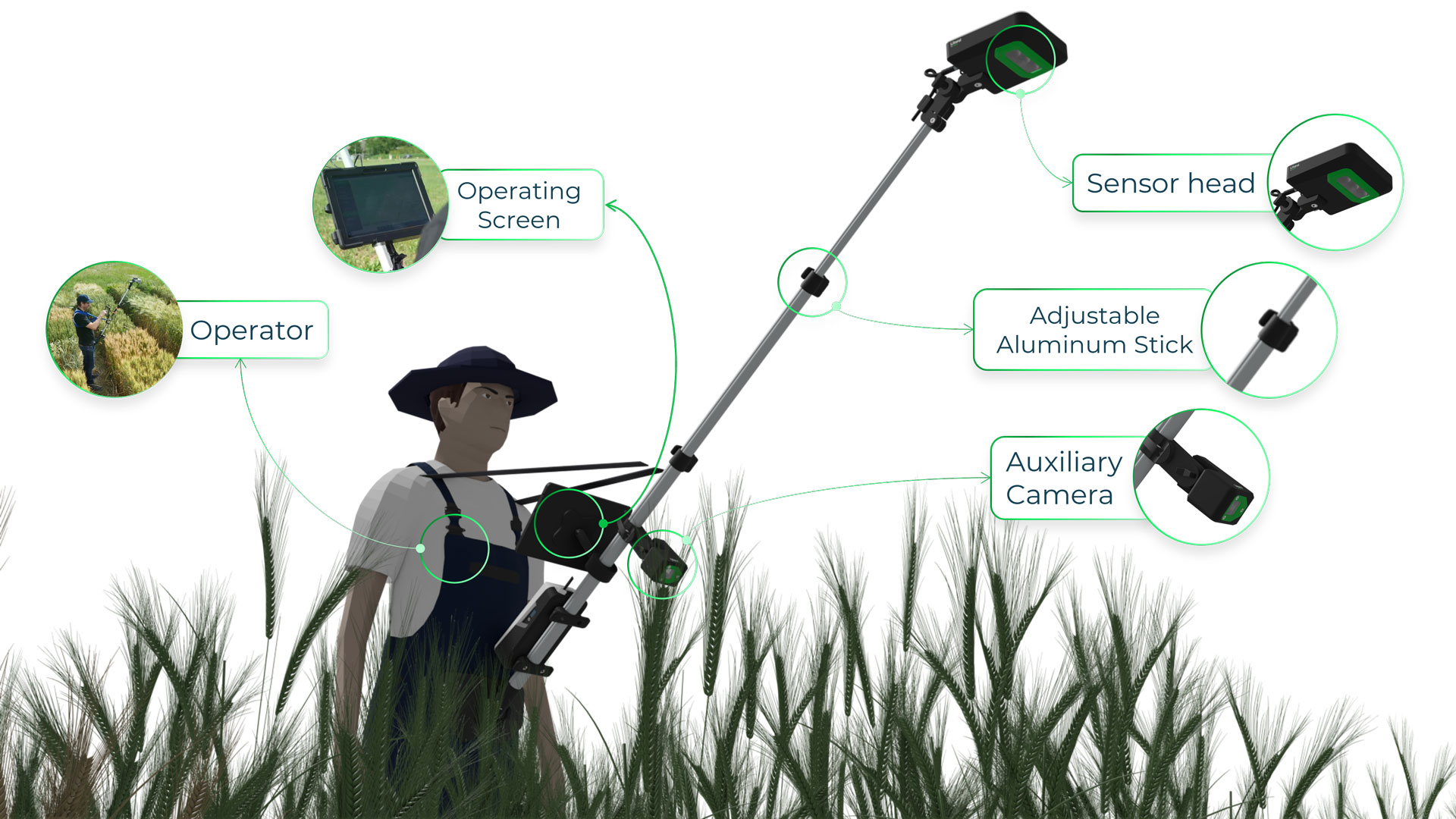
Unmatched Precision in Plant Phenotyping
Precision is paramount in the field of plant phenotyping, where the slightest variation in data can lead to significant differences in outcomes. Literal® redefines precision phenotyping by utilizing advanced imaging technologies to deliver highly accurate assessments of plant traits. Traditional phenotyping methods, often reliant on manual observation, can introduce human error and inconsistencies. Literal® eliminates these uncertainties, providing a precise, reliable foundation for your research.
The accuracy of Literal®'s data output ensures that every aspect of a plant's physiology is meticulously captured and measured. From the subtle changes in leaf chlorophyll content to the nuanced growth patterns over time, Literal® provides the granular detail necessary to truly understand how a plant is performing. This level of precision is indispensable for making informed, data-driven decisions in crop research and breeding.
Furthermore, the repeatability of Literal®'s assessments guarantees that the data collected is consistent across different trials and environments. This consistency is crucial for researchers who need reliable data to compare the performance of different plant varieties or to assess the impact of environmental variables. With Literal®, you can trust that your phenotyping data is both precise and dependable, enabling you to focus on interpreting the results and making strategic decisions based on solid evidence.
Deep Insights into Plant Physiology
Understanding plant physiology is at the heart of successful breeding and agricultural product development. Literal® offers an unparalleled window into the inner workings of plants, providing detailed data that reveals how plants grow, develop, and respond to environmental conditions. By focusing on the physiological traits that matter most, Literal® helps researchers uncover the relationships between plant traits and their performance under various stresses, such as drought or nutrient deficiency.
Literal®'s advanced imaging technology captures data on key physiological indicators, such as chlorophyll fluorescence, leaf area, and biomass accumulation. This data is invaluable for researchers seeking to understand how plants allocate resources, manage stress, and ultimately produce yield. By providing a detailed view of plant physiology, Literal® empowers researchers to identify the traits that contribute to resilience, productivity, and sustainability in crops.
Moreover, Literal® enables the continuous monitoring of these physiological traits throughout the growing season, allowing researchers to observe how plants adapt to changing conditions over time. This longitudinal data is crucial for understanding the dynamics of plant growth and for making informed decisions about which traits to prioritize in breeding programs. With Literal®, you gain a comprehensive understanding of plant physiology that goes beyond surface-level observations, allowing you to delve into the complex interactions that determine plant performance.
Data-driven Decision-making for Improved Research Outcomes
In the realm of plant breeding and crop research, data-driven decision-making is essential for achieving successful outcomes. Literal® provides the precise, repeatable data needed to make these decisions with confidence. By capturing detailed information on plant traits, Literal® transforms raw data into actionable insights that guide your research and development efforts.
The clarity and reliability of the data provided by Literal® enable researchers to make informed choices about which traits to select for in breeding programs, how to optimize field trials, and which environmental conditions to prioritize in their studies. This data-driven approach reduces the uncertainty and risk associated with field trials, leading to more predictable and successful results.
Literal®'s ability to provide consistent, high-quality data across different environments and trials is particularly valuable for large-scale breeding programs. Whether you're comparing the performance of different crop varieties or assessing the impact of environmental variables, Literal® ensures that the data you rely on is accurate and comparable. This allows you to make meaningful comparisons and draw robust conclusions from your research, ultimately leading to better breeding decisions and more successful crop outcomes.
Enhancing Field Trials with Precise Trait Assessment
Field trials are a critical component of agricultural research, providing the empirical evidence needed to validate breeding decisions and evaluate the performance of new crop varieties. The success of these trials hinges on the accuracy and reliability of trait assessments. Literal® enhances field trials by offering a phenotyping solution that delivers precise, detailed, and repeatable data on a wide range of plant traits.
With Literal®, researchers can assess key physiological traits such as growth rates, leaf area, and chlorophyll content with a level of precision that was previously unattainable. This precision is essential for accurately evaluating how different plant varieties perform under various environmental conditions. Literal®'s non-destructive measurement capabilities allow researchers to monitor plant traits continuously throughout the growing season, providing a more complete picture of plant development and performance over time.
The ability to capture and analyze detailed physiological data in real-time is particularly valuable for optimizing field trials. By understanding how plants respond to different stressors at various stages of development, researchers can make more informed decisions about which traits to prioritize in breeding programs and how to manage field trials for maximum success. Literal®'s precise trait assessments provide the foundation for these decisions, ensuring that field trials are both effective and efficient.
Supporting Innovation in Plant Breeding & Product Development
Innovation in plant breeding is driven by the ability to accurately measure and understand the traits that contribute to crop success. Literal® supports this innovation by providing the tools and data needed to explore new breeding strategies and push the boundaries of crop development. Whether you're working to develop drought-resistant crops, improve nutrient use efficiency, or enhance pest resistance, Literal® gives you the insights necessary to innovate with confidence.
Literal®'s precise phenotyping capabilities enable breeders to identify and select for the traits that are most likely to result in successful, resilient crops. By providing detailed data on plant physiology, Literal® helps breeders to understand the genetic and environmental factors that influence plant performance, leading to more targeted and effective breeding strategies.
In addition, Literal®'s ability to provide consistent, high-quality data across different trials and environments ensures that breeders can trust the data they use to make breeding decisions. This reduces the risk of failure and increases the likelihood of success in breeding programs, making it easier for breeders to take bold steps in their research and development efforts. With Literal®, you have the data you need to innovate and achieve success in plant breeding.
As the challenges facing agriculture continue to evolve, the need for precise, reliable data has never been greater. Literal® is more than just a phenotyping tool; it is a vital resource for plant breeders, crop researchers, and agricultural product developers who seek to understand and improve plant physiology. By providing the precise data needed to make informed decisions, Literal® is shaping the future of agriculture and contributing to the development of more resilient, productive, and sustainable crops.
The impact of Literal® extends beyond individual research projects or breeding programs. By improving the accuracy and reliability of data in agricultural research, Literal® is contributing to a broader understanding of plant biology and crop production. This knowledge is essential for addressing the global challenges of food security and environmental sustainability and for ensuring that agriculture can continue to meet the needs of a growing population.
In conclusion, Literal® is a powerful tool that offers unmatched precision in plant phenotyping, enabling researchers to gain deep insights into plant physiology and make data-driven decisions with confidence. Whether you're a plant breeder, crop researcher, or agricultural product developer, Literal® provides the tools and data you need to succeed in today's complex agricultural landscape.
What sets Literal® apart from other plant phenotyping tools?
Literal® distinguishes itself through its focus on precision phenotyping, offering highly accurate and repeatable assessments of plant traits that are essential for understanding plant physiology.
How does Literal® improve the accuracy of field trials?
Literal® enhances field trials by providing detailed and reliable trait assessments that allow researchers to make accurate comparisons and informed decisions about plant performance under various conditions.
Can Literal® be used for large-scale breeding programs?
Yes, Literal® is designed to support large-scale breeding programs by providing consistent and precise data across different environments and trials, you can build your Literal fleet to meet your needs, making it ideal for extensive breeding efforts.
How does Literal® support sustainable agriculture?
Literal® contributes to sustainable agriculture by enabling the development of crops that are more resilient to environmental stressors and by supporting precision agriculture techniques that optimize resource use.
Is Literal® suitable for both research and commercial applications?
Absolutely. Literal® is versatile enough to be used in both academic research and commercial breeding programs, making it a valuable tool for anyone involved in crop research or development.
What kind of data can Literal® collect?
Literal® collects detailed data on a wide range of plant traits, including growth rates, leaf area, chlorophyll content, and responses to environmental stressors, providing a comprehensive understanding of plant physiology.
To discover more, you can check our product page or book a meeting with one of our experts to get your personalized demo-tour.
Speak soon,
Your Hiphen Team
[Literal® technology under license from Arvalis]

New features have been added to Cloverfield™, your plant phenotyping online platform. Embark on a smoother plant breeding adventure with Hiphen's latest addition: Dynamic Filtering.
Optimize your breeding scheme by effortlessly filtering your genetic material in a few clicks within Cloverfield™.
Interactively combine traits and set thresholds to filter out under-performing genotypes, or pinpoint the top-performing material you want to advance to the next stage.
Define more precisely your analytics profile. Specify more precisely the experiments, modalities and layers that you which to study and/or compare. You can create multiple profiles for the same trial site.
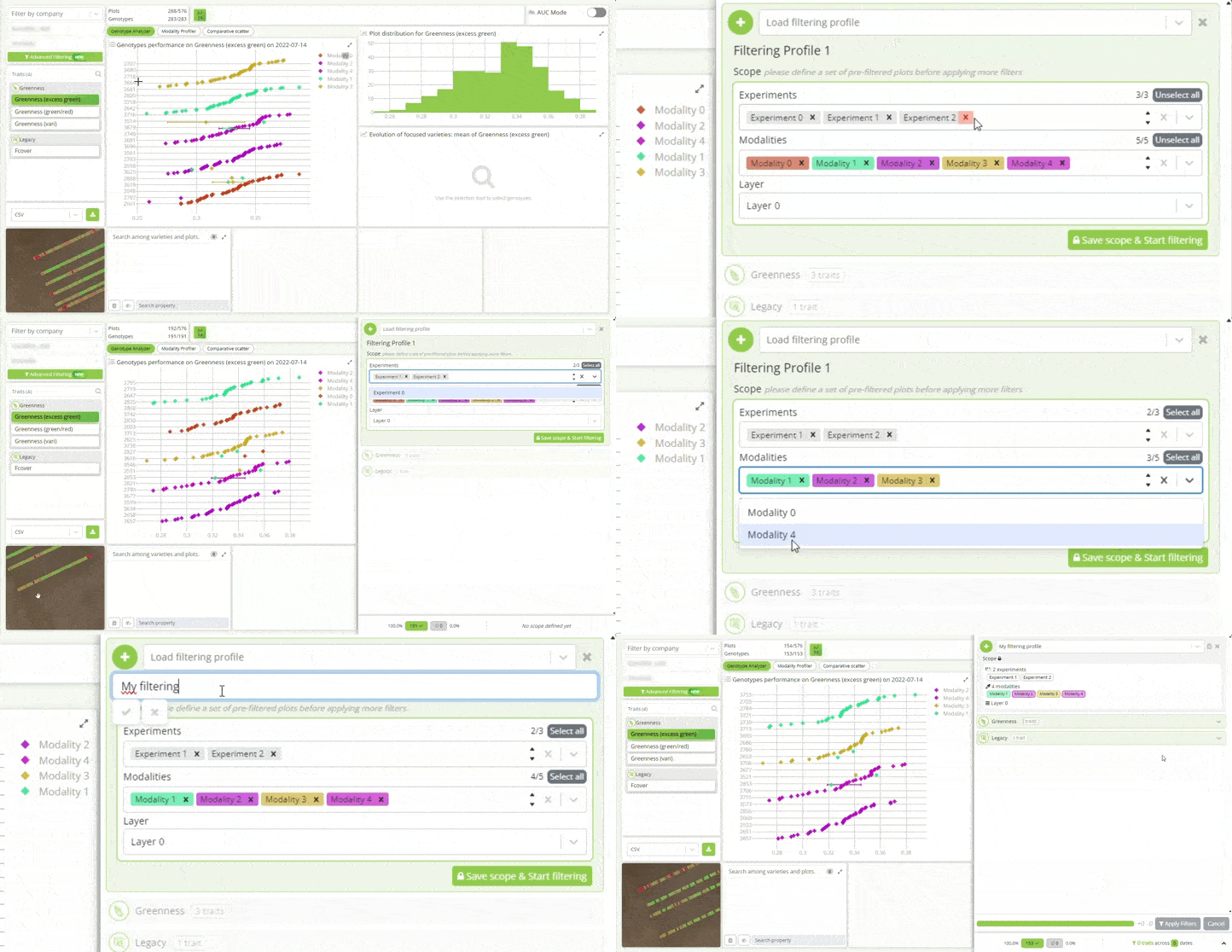
One step further in making your digital phenotyping experience frictionless with Hiphen, you're now able to make a detailed analysis of your data directly in Cloverfield™. You can easily combine traits and set for each one thresholding boundaries outside of which you wish to eliminate genetic material. For instance, one could set independent min-max thresholds for traits like plant biovolume, flower cover, stay green and lodging and see dynamically what share of the trial genetic material he/she is eliminating. This functionality will take you ever closer to reaching your ideotypes more efficiently than ever before!
User value: Apply multiple criteria filtering on your genetic material and dynamically eliminate under-performing genotypes based on your ideotype recipe.
Use Cases:
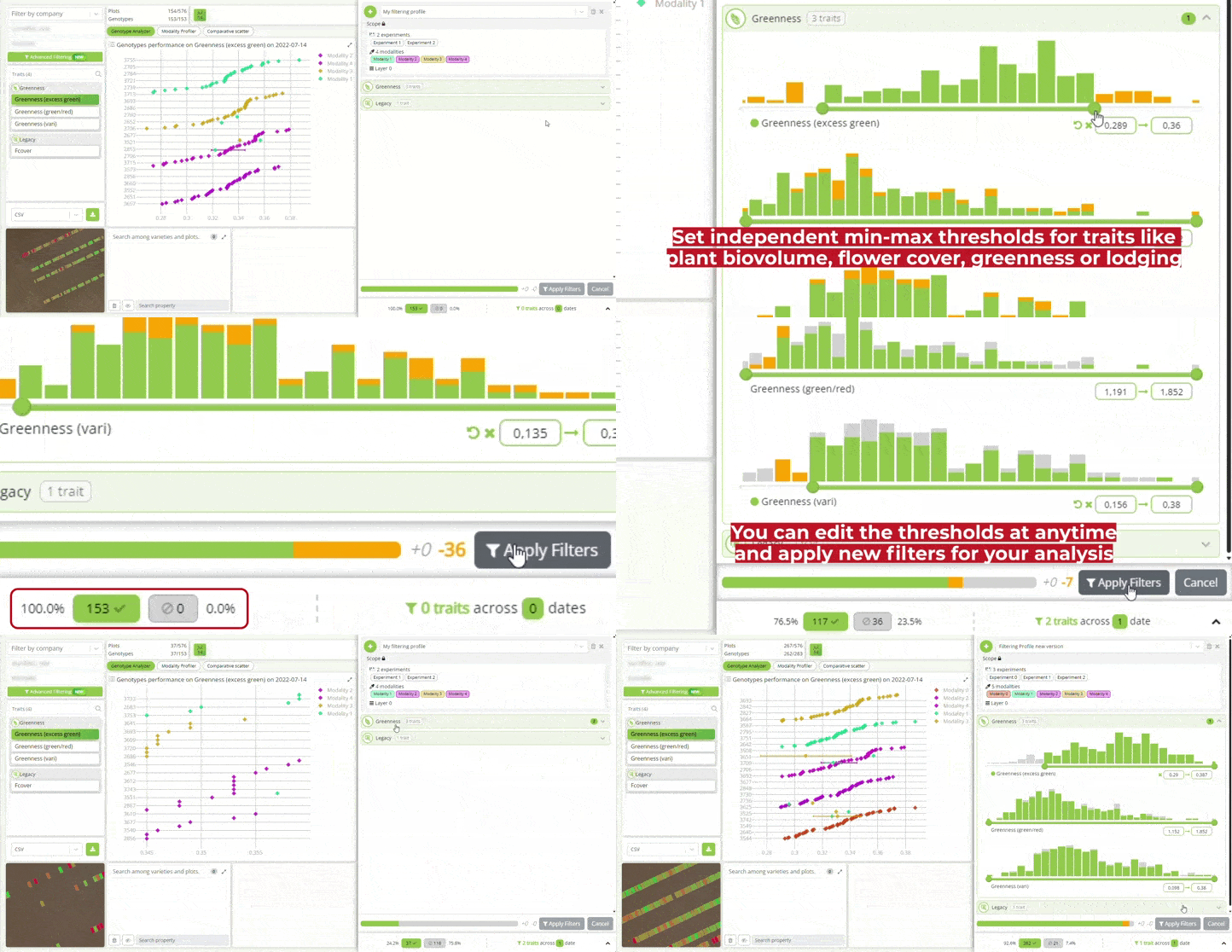
We invite you to explore the new dynamic filtering feature with the online INTERACTIVE TOUR. And please reach out to your Hiphen Campaign Manager should you have any question.
Stay tuned for the next Cloverfield™ features release update next month.
Sincerely,
Your Hiphen Success Team.

We are committed to meeting the evolving needs of crop researchers, and reimagined the way we articulate our Cloverfield™ Glossary with this this purpose in mind. This new intuitive format helps to parse the 70+ phenotypic traits we process routinely every year. Traits are grouped in explicit agronomic themes, with definitions and visuals to be transparent with regards to methodology. The new version places a strong emphasis on five distinct trait categories:
These categories have been carefully curated to cater to the unique needs of agronomic researchers, providing you with a more precise and comprehensive understanding of phenotypic measures available off-the-shelf for your crops.
With this new version, we are also unveiling our revamped interface for an enhanced user experience. Dive into an enriched journey of knowledge with our detailed visualizations and graphs, providing transparency into our advanced traits processing methodology.
Additionally, a powerful search functionality is now at your disposal to easily navigate the content of the glossary. Try it now!
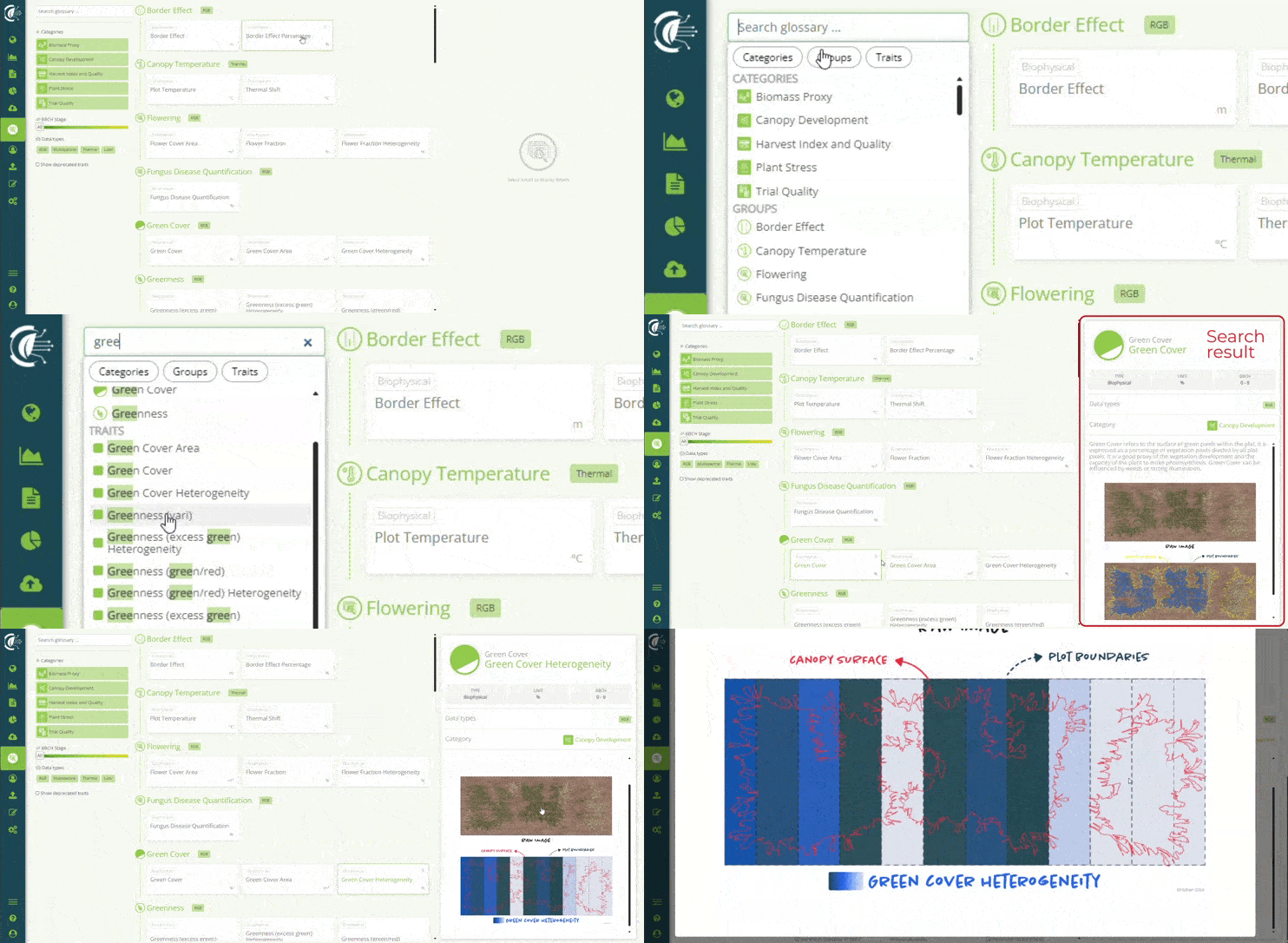
Feel free to share this open online resource, establishing the new standards in digital phenotyping methodology for Ag research, with your fellow researchers to foster discussions within the scientific community. Moreover, we invite you to regularly check out this resource to keep up to date with the latest traits available. We eagerly anticipate collecting your feedback on this new traits' glossary. Your insights are valuable as we continue to advance in the field of agricultural research.
Cloverfield's Glossary is designed to offer definitions for the traits computed by HIPHEN. Alexis Comar, PhD describes a phenotypic trait as: "A measurable characteristic of the plant or canopy. It is the result of combining raw data obtained from sensors such as cameras, lidar, spectrometers, etc., with an analytical method for interpretation. This process serves as the means to transform raw sensor data into meaningful metrics for agronomists."
We've shared previouosly on our blog a post about what is a phenotypic trait – Read it now.
Hiphen's roots are deep into crop science, which truly sets us apart in the digital phenotyping realm. We gather a decade of experience and an unwavering commitment to agricultural research to ensure that our solutions align with your objectives.
The new and improved Cloverfield Glossary is a testament to our dedication to empowering you with the tools you need to make informed decisions and optimize your agricultural practices.
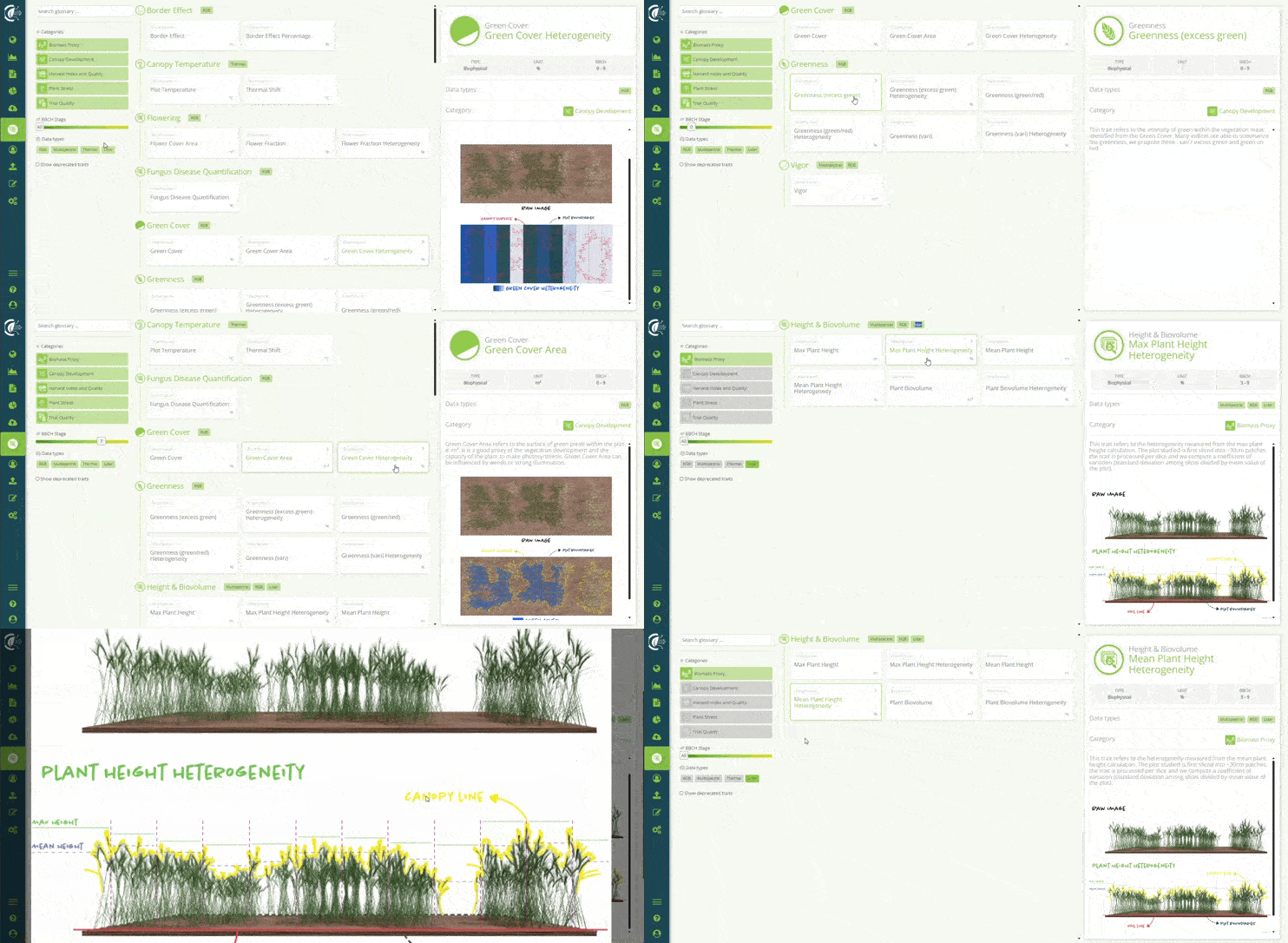
We invite you to explore the new traits' glossary and ask your Hiphen Campaign Manager should you have any question.
Stay tuned for the next Cloverfield™ features release update next April.
Sincerely,
Your Hiphen Success Team.
Cloverfield v2.8.0 – October 04th, 2023
New features have recently been added to Cloverfield™, your plant phenotyping online platform, and in this blog post we are going to take a deeper dive into those 6 new features:
You can now autonomously manage the creation of new trial sites directly through Cloverfield™. Add a new location or change its name without having to ask your Hiphen Campaign Manager. Only accessible for users with 'Admin' rights assigned to the contract.
💎 User value: Save time and be autonomous with your campaign management.
⚙️ Use Cases:

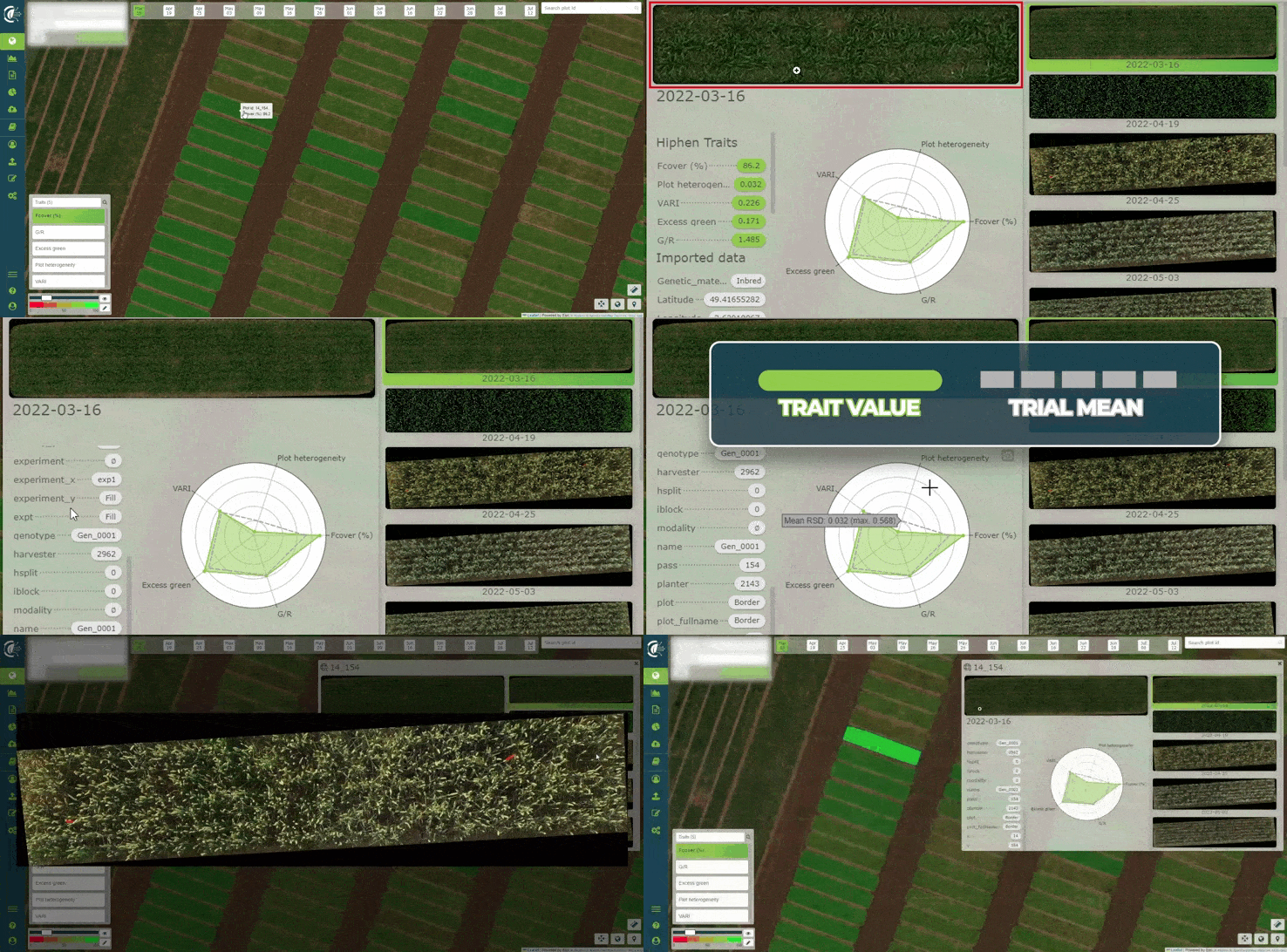
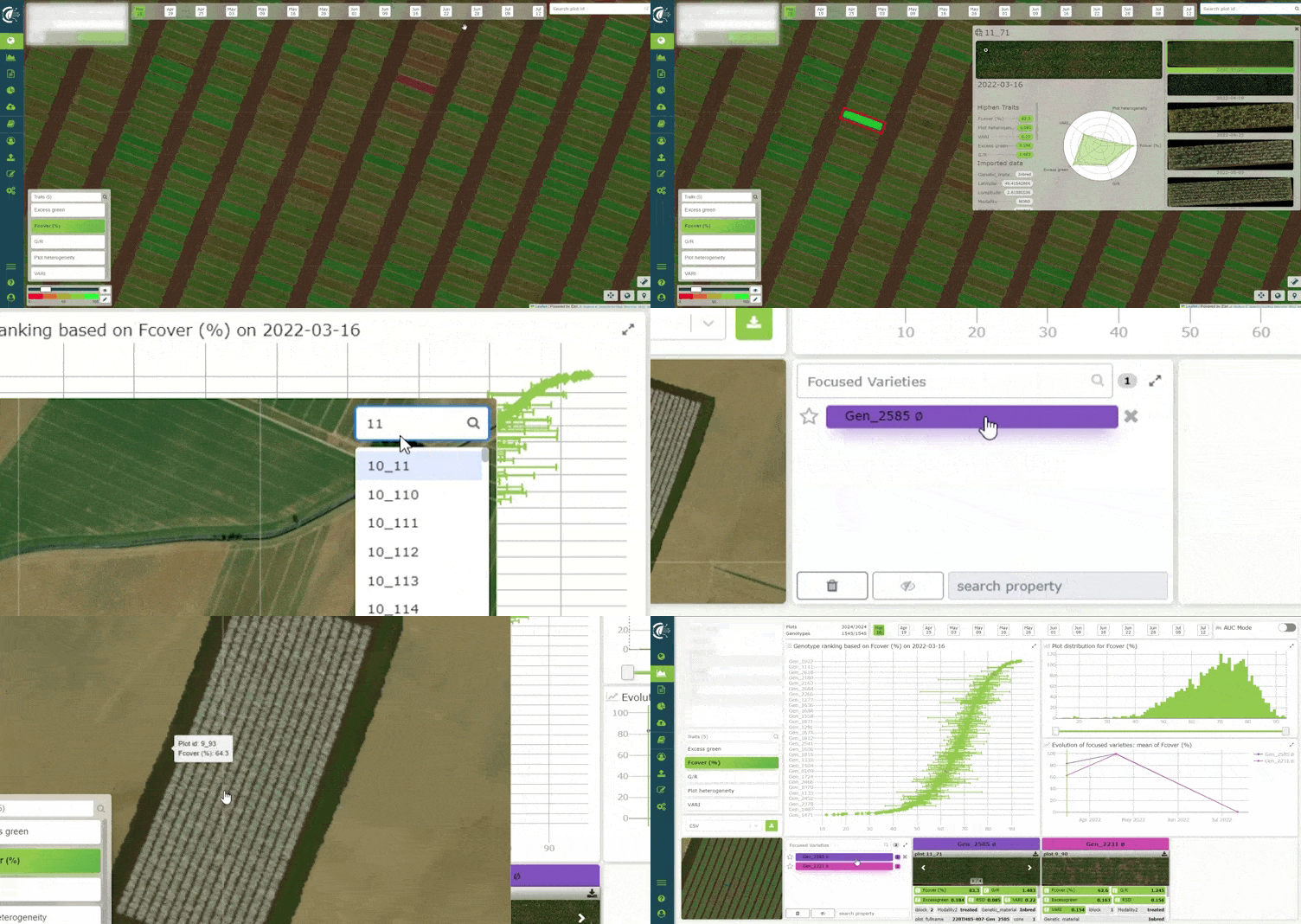
Clicking on a plot in the map view will give you access to a new window that displays next to each other the plot images from each flight. You can now efficiently visualize a single plot’s evolution through time in one click.
The new window also provides the trait results computed for the selected plot at the selected date. Finally, a new spider chart helps to efficiently assess how the plot performed versus the trial’s mean.
💎 User value: Access plot information and history at once for faster inspection and decision-making during the campaign.
⚙️ Use Cases:
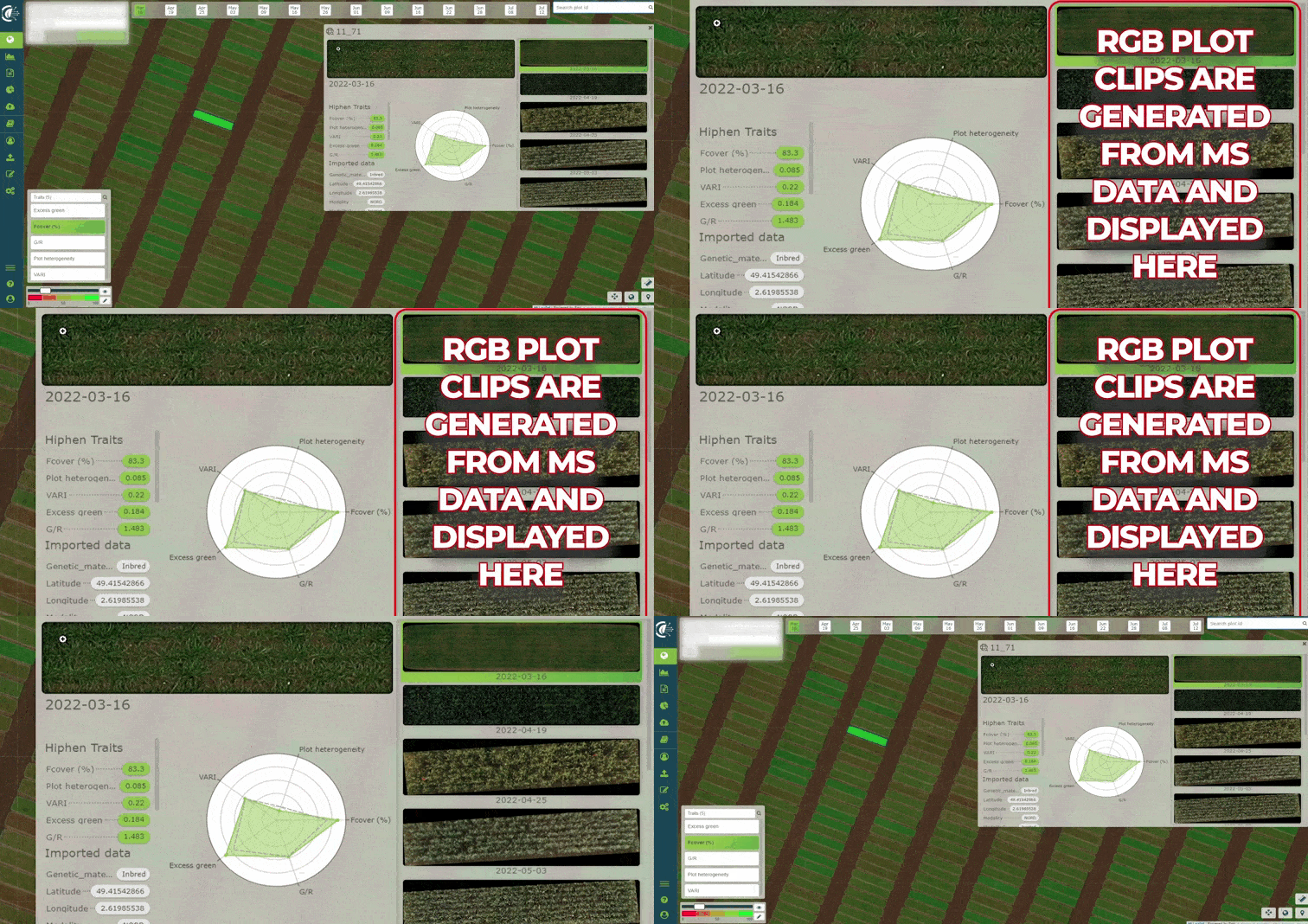
For future multispectral flights, RGB plot clips will be generated from the orthomosaic and posted into the analytics tool. Just as it is the case for RGB flights, you’ll then be able to inspect multispectral plot imagery in more details directly from Cloverfield™.
**💎 User value:**Check the raw image of your plot acquired with a MS sensor.
⚙️ Use Cases:
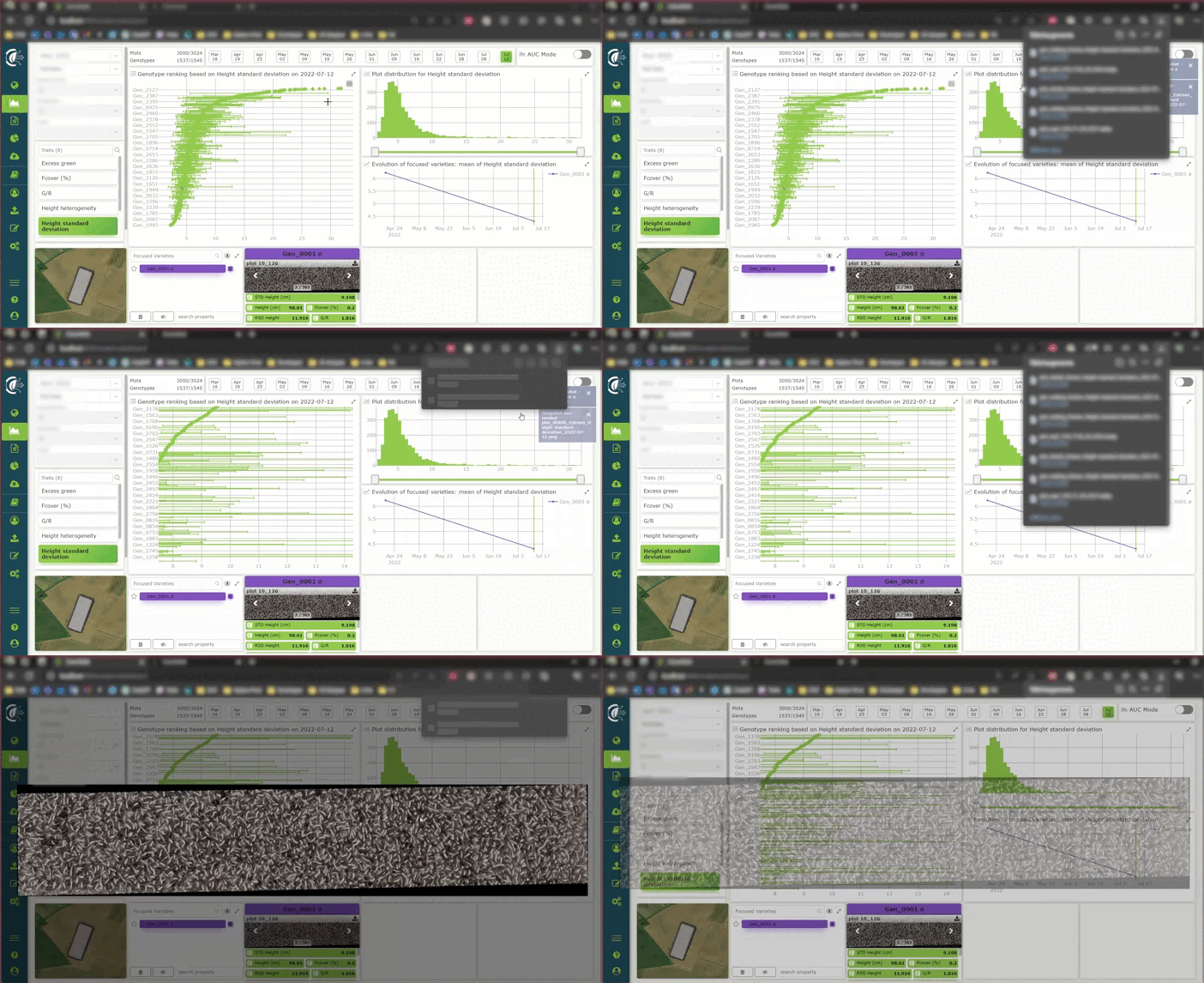
Download graphs displayed in the Analytics tool and any plot clips to insert them into your presentations and internal communication. The file format will be an image (.webp) which will following the following file naming convention: site name_date_plot name.webp.
**💎 User value:**Boost your internal communication about the results of your trial programs.
⚙️ Use Cases:
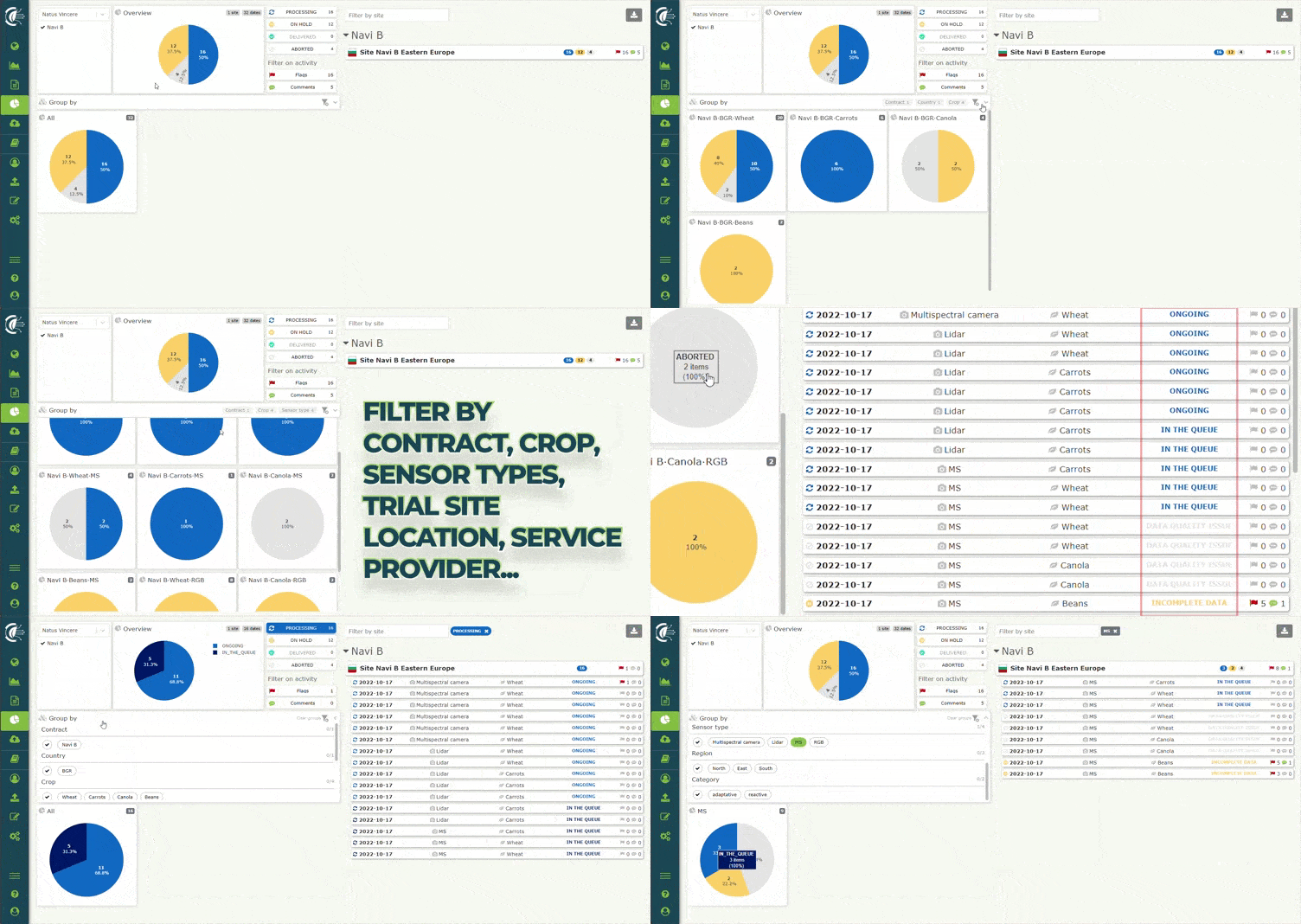
We have refreshed the design of the monitoring tool that keeps you informed of the data processing progress for each flight you upload. The page ergonomics has been improved and we added new filters based on your feedback. You can now group specific filters to get a more granular and custom progress tracking update. Filters include campaign, region, country, crop and sensor type.
You can also filter flags and comments posted by your Hiphen Campaign Manager in a more intuitive manner. This allows you to very efficiently focus on datasets that require your attention.
💎 User value: Get all the transparency you need about data processing progress, pinpoint flights that require attention and use this tracking tool for your own internal reporting.
⚙️ Use Cases:
In the map and analytics pages, at the top right corner of the map, enter a specific plot name in the search bar to pinpoint its position on the plot map and select it.
Once the search bar is used, we will automatically suggest you to add the plot of interest to the 'plot exploration' section of the analytics page.
**💎 User value:**Save time exploring specific plots of interest.
⚙️ Use Cases:
For more information, reach out to your Hiphen Campaign Manager. Stay tuned for the next Cloverfield™ features release update next month.
Sincerely, Your Hiphen Success Team.

As agriculture continues to embrace digital transformation, the advent of data-driven technologies has ushered in a new era of precision farming and sustainable practices. At the heart of this transformation lies the Application Programming Interface (API), a set of functions and protocols that enables seamless data exchange and communication between applications, operating systems, and web servers.
In the realm of data-driven agriculture, APIs play a pivotal role in empowering farmers, researchers, and agribusinesses to harness the full potential of the data they and third-parties are collecting.
In this blog post, we will delve into the numerous benefits of APIs in the agriculture realm, with a focus on the integration of the Cloverfield application and how it leads to automation, efficiency, and secure data exchange.
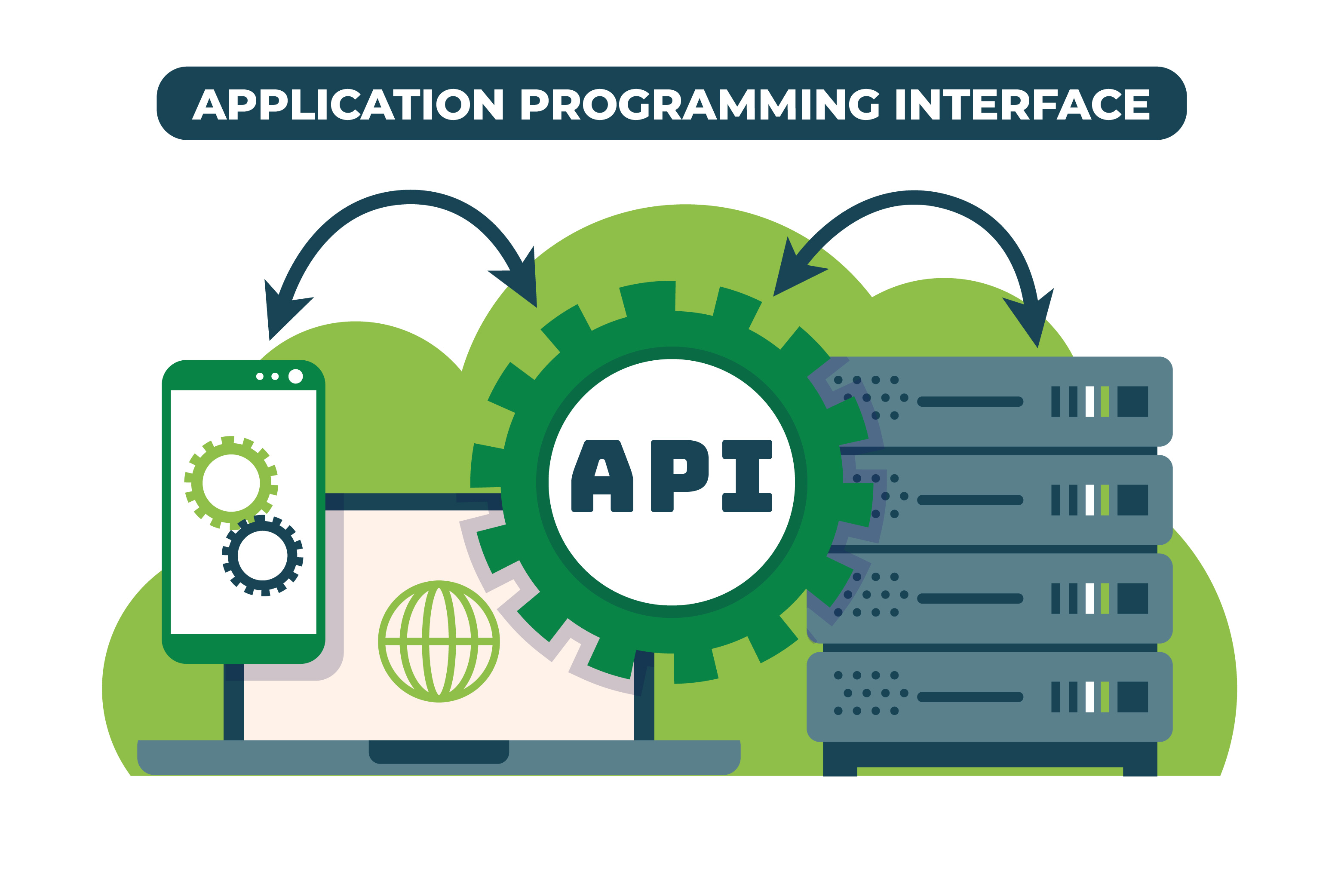
An API connects one service to another to share and exchange information automatically and securely.
The agriculture sector generates vast amounts of data from diverse sources, including weather stations, soil sensors, drones, and satellite imagery. API-driven integration facilitates the seamless exchange of this data, allowing stakeholders to access and combine information from different platforms. By providing a unified view of the data, APIs empower decision-makers to gain valuable insights and make informed choices to boost plant research, crop management and resource optimization.
In the context of the Cloverfield application, APIs enable the automation of tasks that once required human intervention. By integrating Cloverfield with other applications through APIs, researchers can effortlessly collect and analyze data without manual effort, saving valuable time and resources to focus on what matters the most.
Precision agriculture is at the forefront of modern agricultural practices, and APIs are instrumental in its success. These interfaces enable client applications to securely communicate with Cloverfield, exchanging datasets and retrieving valuable results from the processing of plant assessments. Through APIs, researchers, product developers and producers gain access to real-time and historical data, such as weather forecasts, soil health reports, and crop performance metrics.
Armed with this data-driven knowledge, researchers can implement accurate decision-making processes. They can optimize breeding cycles, trial quality assessment, product performance evaluation, harvest quality and plant stress assessments, all leading to increased crop yields and improved resource efficiency that help shaping the agriculture of tomorrow.
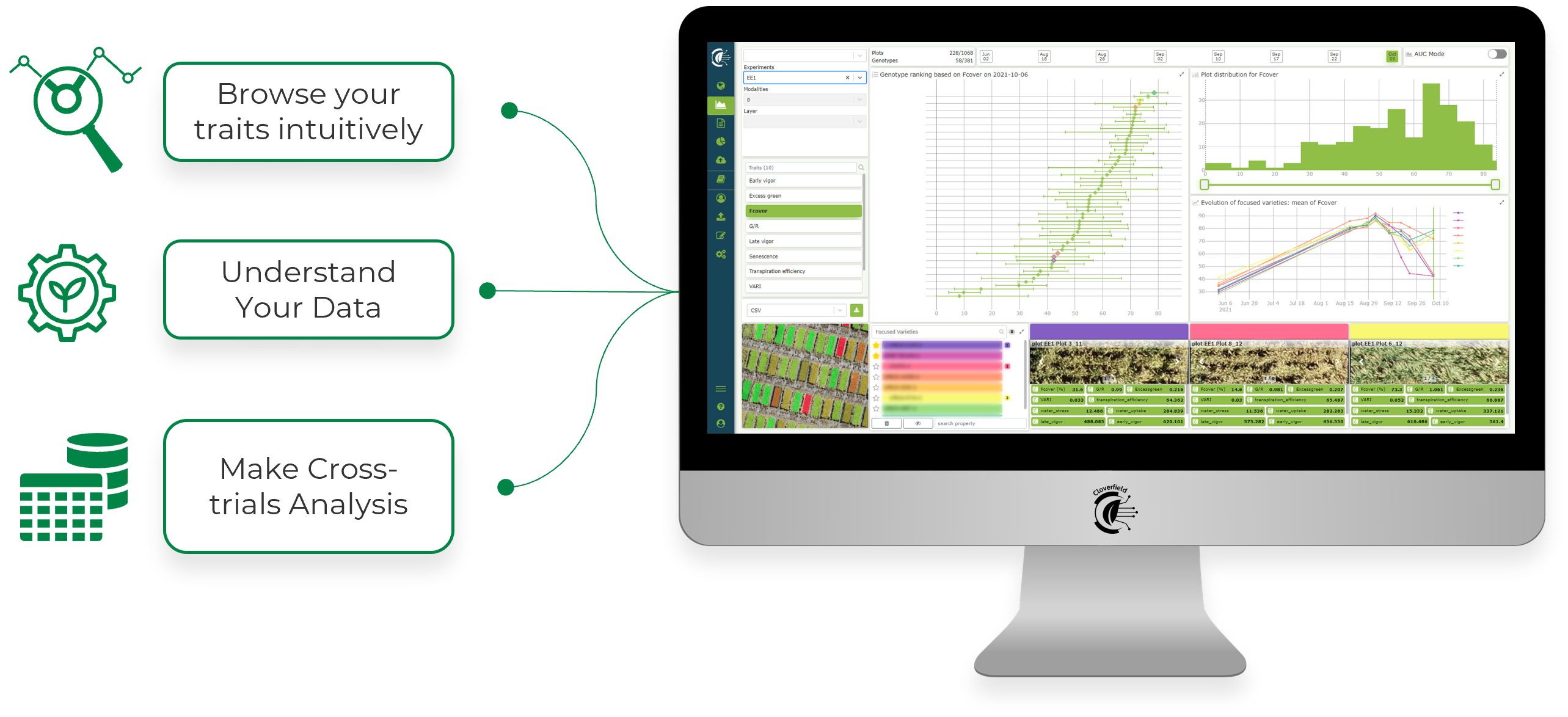
Cloverfield™ Data Platform is using APIs to collect and share information.
Data security is paramount in any industry, especially agriculture, were sensitive information impacts food production and supply chain management. In the Hiphen context, where APIs facilitate communication between client applications and the Cloverfield data platofmr, data exchange is conducted securely.
APIs offer robust authentication and encryption mechanisms, ensuring that data is transmitted safely, and only authorized users can access it. This secure environment fosters collaboration among different stakeholders, such as farmers, researchers, and agribusinesses, leading to knowledge-sharing and innovation within the agricultural community.
APIs have emerged as indispensable tools in the data-driven agriculture realm, transforming traditional agricultural practices into efficient, data-powered operations. Through seamless data integration and connectivity, APIs allow stakeholders to harness the full potential of agricultural data, paving the way for deeper research and improved seed breeding based on phenotypic data assessment.
The integration of the Cloverfield application through APIs brings automation, efficiency, and secure data exchange to the forefront of agriculture. However, it is essential to acknowledge that setting up API integration may require the expertise of an IT team. Nonetheless, the benefits of enhanced decision-making, increased efficiency, and collaboration make it a worthwhile investment.
As the agriculture industry continues to embrace data-driven technologies, APIs will play an even more significant role in shaping a greener, more sustainable future for global agriculture. By leveraging APIs effectively, researchers and agribusinesses can optimize resources and drive innovation in the pursuit of food security and a thriving agricultural sector.
Sincerely,
Your Hiphen Team.